Wednesday, March 11, 2009

Powerful Words On The Eucharist From Benedict


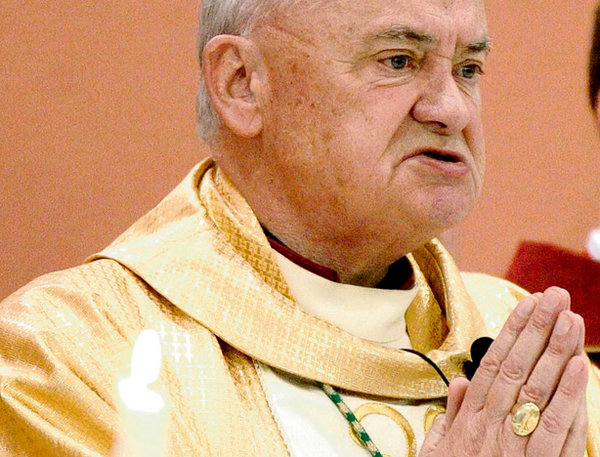
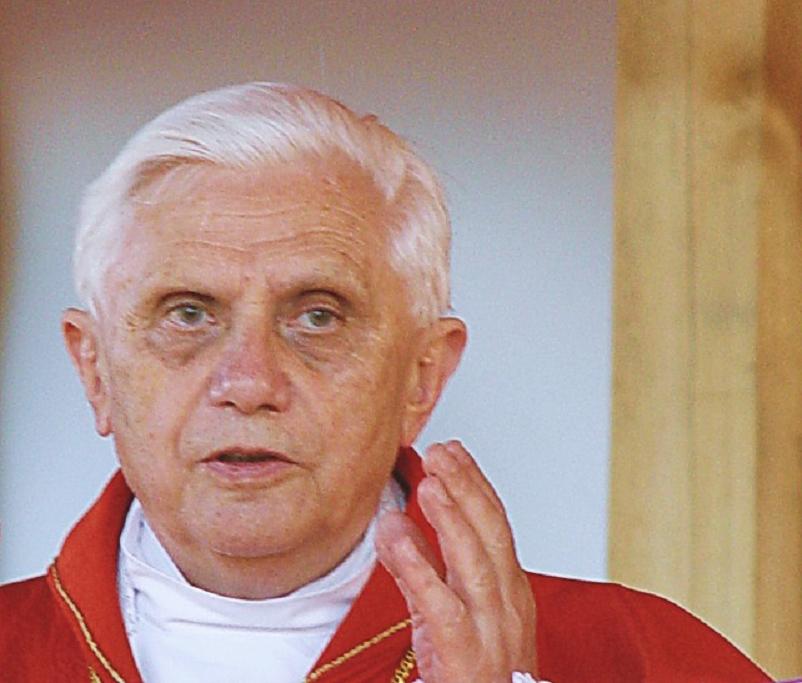
The following article is excerpted from Zenit's translation of Pope Benedict's question and answer session with priests of the diocese of Rome. It is part of a longer answer about the centrality of the Eucharistic celebration. The priest who asked the question wanted Benedict's take on the notion that all theology should be connected to the theology of the Eucharist. I think this is one of the most brilliant reflections I have ever read from Benedict.


The mystery is the heart from which comes our strength, and to which we return to find this center. And that is why I think that catechesis, let us say mystagogic [catechesis], is really important. Mystagogic also means realistic, referred to our life of men of today. If it is true that man in himself knows not his measure -- that he is just and that he is not just -- but that he finds his measure outside of himself, in God; it is important that this God not be distant but reconcilable, concrete, that he enter our lives and really be a friend with whom we can talk and who talks with us. We must learn to celebrate the Eucharist, learn to know Jesus Christ, the God with a human face, up close, really enter into contact with him, learn to listen to him and to allow him to enter into us. Because sacramental communion is precisely this interpenetration between two persons. I am not taking a piece of bread, or flesh, but I take or I open my heart so that the Risen One will enter the context of my being, so that he is within me and not just outside of me, and thus speaks with me and transforms my being. He gives me the sense of justice, the dynamism of justice, in zeal for the Gospel. (Wow, finally a confirmation that the Eucharist is about the Risen Christ.)


This celebration, in which God not only comes close to us, but enters into the fabric of our existence, is essential to really be able to live with God and for God and to take the light of God to this world. Let us not go into too many details now. But it is always important that the sacramental catechesis be an existential catechesis. Of course, even accepting and increasingly learning the mystic aspect -- where words and reasoning fail -- the latter is totally realistic, because it leads me to God, and God to me. It leads me to the other because the other receives the same Christ, as I do. Hence, if the same Christ is in him and me, we also are no longer separate individual beings. Herein lies the birth of the doctrine of the Body of Christ, because we have all been incorporated if we receive the Eucharist correctly in the same Christ. Hence, my neighbor is truly close: we are no longer two separate "I"s, but we are united in the same "I" of Christ. (In my book, this is what makes a Catholic a Catholic, the understanding that we are united in the same "I" of Christ through partaking in the Eucharist.)


In other words, Eucharistic and sacramental catechesis must really go to the depth of our existence, to be, in fact, education to open myself to the voice of God, to let myself be opened to break this original sin of egoism and to open my existence profoundly, so that I will really be just. In this sense, it seems to me that we must all learn the liturgy better, not as something exotic but as the heart of our being Christian, which does not open easily to a distant man, but which is, on the other hand, precisely openness to the other, to the world. We must all collaborate in celebrating the Eucharist ever more profoundly: not only as a rite but as an existential process that touches me profoundly, more than anything else, and changes me, transforms me and, by transforming me, sparks the transformation of the world that the Lord desires and of which He wishes to make me an instrument.


**********************************************************


The Eucharist is an existential process that happens to be codified in a ritual. All valid spiritual ceremonies are at their heart existential processes. They derive their power from relationship, not ritual. In the Mass Catholics celebrate and engage in a relationship with the Risen Christ, and it's real. The only limits to the extent of the relationship are ones of our own creating. No one has any God given right to deny this relationship to any other believer. When it happens, it's because it's a Man taken right, and as such it has no basis in God's reality.


If this Eucharistic understanding of Benedict's really was the central teaching around which all other teachings orbit, this understanding of Benedict's would radically reform the Church. It is not only a good place to start, it is the core place to start and this is great theology. At least in my humble opinion.

Tuesday, March 10, 2009

When Turn About Is Not Fair Play


Archbishop of Denver warns that Conn. bill threatens Catholics everywhere

CatholicNewsAgency Denver, Colo., Mar 9, 2009

Although the legislation in question was introduced in Connecticut, Archbishop Charles Chaput of Denver has issued a statement on a bill that would effectively sever the relationship between a bishop and his pastors and parishes. Archbishop Chaput says in his statement, "What Happens in Connecticut Matters Here," that the bill is "bad public policy in every sense."

The Senate Bill 1098 was introduced last Thursday by the chairs of the Judiciary Committee of the Connecticut State Legislature: Senator Andrew McDonald of Stamford and Representative Michael Lawlor of East Haven.

Sen. McDonald and Rep. Lawlor are both homosexual activists, who have opposed the local Church’s efforts to defend marriage between a man and a woman.

The bill’s supposed purpose is to increase financial oversight of the Church, following two recent embezzlement cases.

However, the proposed legislation also reorganizes the internal structure of the Church, removing the bishop as the head of the board of the parishes in his diocese and requiring the pastor to report to a board composed of laity instead of the bishop. Under the bill, the bishop is also relegated to being an "ex officio" member of the board, without voting rights.

Addressing the perception that outsiders have of the Church as "a monolith," Archbishop Chaput said that "the opposite is true."

"Her real structure is much closer to a confederation of families. Each diocese or ‘local Church’ is accountable to the Holy See and in relation to one another within the Catholic faith," the archbishop explained.

"Bigoted legislators," Chaput said in reference to Sen. McDonald and Rep. Lawlor, "including some who claim to be nominally or formerly ‘Catholic,’ are thankfully uncommon. Most lawmakers, whatever their convictions, sincerely seek to serve the common good.

"But prejudice against the Catholic Church has a long pedigree in the United States. And rarely has belligerence toward the Church been so perfectly and nakedly captured as in Connecticut’s pending Senate Bill 1098, which, in the words of Hartford’s Archbishop Henry Mansell, ‘directly attacks the Roman Catholic Church and our Faith.’"

"In effect, SB 1098 would give the state of Connecticut the power to forcibly reorganize the internal civil life of the Catholic community. This is bad public policy in every sense: imprudent; unjust; dismissive of First Amendment concerns, and contemptuous of the right of the Catholic Church to be who she is as a public entity," the archbishop criticized.

"If Catholics want Caesar telling them how they’re allowed to live their civil life as a community, this is exactly the kind of legislation to make it happen.

Archbishop Chaput closed his statement by warning that the "legislative coercion directed against the Catholic community in one state has implications for Catholics in every other state. If bigots in one state succeed in coercive laws like SB 1098, bigots in other states will try the same."
Copyright @ CNA


*************************************************************


The first time I read this analysis from Archbishop Chaput I kept changing words. I changed everything in this article to refer to gays and Prop 8, rather than Roman Catholicism and SB 1098. The last paragraph reads thusly:

Archbishop Chaput closed his statement by warning the the "legislative coercion directed against the gay community in one state has implications for gays in every other state. If bigots in one state succeed in coercive laws like Proposition 8, bigots in other states will try the same."

Funny how one man's constitutional crisis is another man's right to legislate. While I seriously doubt that SB1098 will pass, because of it's constitutional limitations, I'm also well aware that opponents of gay marriage don't find any problems with changing state constitutions in order to push their agenda. SB 1098 is not an attempt to change constitutional language to pursuit an agenda against the Church. It's an attempt to give laity who actually fund the operations of parishes and dioceses the legal responsibility in how those funds are used and accounted for. The two embezzlement cases which are the impetus for this bill, amounted to over 1.4 million dollars. That's not chump change and it's not novel.

Ultimately, I believe it's the laity themselves who should be taking charge in over site matters, and not state legislatures. The problem is the laity have no real over site authority in Canon Law. Their only recourse is secular law when embezzlement issues come to the forefront. This is exactly the same conundrum faced by sexual abuse victims. The only people who seem to get any justice from diocesan or Vatican officials are right wing fundamentalists, as the Australian Church has found out.

Along these same lines, the Legion of Christ was supposed to have come out with a statement as to the extent of the sexual abuse and embezzlement of Fr. Maciel, but that now appears to be on indefinite hold. Some observers feel Cardinal Rode, who is the head of the Congregation for Institutes of Consecrated Life and Societies of Apostolic Life and has jurisdiction over the Legion, is also in the pocket of the Legion. There for Rode represents a conflict of interest and should be removed from having anything to do with the Legion. Even the very traditional Cardinal Pell has come out in favor of an independent Vatican investigation.

In my mind the Legion represents the two signature issues of transparency and accountability, that of sexual abuse and financial embezzlement. The Vatican could go a long way in restoring the laity's trust in their ecclesial institutions if they dealt openly and honestly with the Legion and Maciel. Continue to stonewall with the Legion, continue to frustrate justice for abuse victims, continue to balk at any financial over site and the laity will continue to seek redress in secular law. They have no other choice.

In the meantime, in Connecticut, turn about is fair play. What goes around comes around and Karma rules.


Monday, March 9, 2009

View From The 10th Tee, River Bend Golf Course, Salt Lake City


When I look back on my life, there seems to be a very strange and yet distinct pattern. I will have feet in two disparate worlds. It's almost as if I'm placed in positions which force me not to lose contact with the multiple faces of humanity.


When I lived in Salt Lake City I was a teaching golf professional at two very nice public golf courses. One of which was a true championship course and was drop dead gorgeous. The view of the Wasatch Mountains from the top of the 10th tee box was spectacular. I used to frequently think as I played this course that it was an example of man's capacity to put his creative signature to work in harmony with nature. The course was also a designated water fowl preserve.


It almost had the feeling of an outdoor cathedral. Perhaps I wax to eloquently, but this was by far the easiest course any of us professionals had ever managed in terms of players exhibiting idiotic behavior. Because of the demand for play, it was not unusual for an 18 hole round to take 5-6 hours on the weekend. I rarely saw impatient or angry people even though there might be four groups of players backed up on a given hole. Instead I saw people at their best. I loved going to work because it really wasn't work.


At the same time, mostly during the off season, I was also a bonded bail agent and rubbed shoulders with some of the least savory people humanity has to offer-- and some of the dumbest, and some of the most addicted, and some of the most pathetic. I saw the world on the opposite side of the country club set, where the rules of engagement are entirely different. Eventually, I began to see that the two worlds were not that different in kind, only in environment and execution.


To give one example, I was stunned with the amount of prescription fraud arrests that came across my desk. Way too many times these were up scale women with large Mormon families whose husbands were clueless.


One Christmas day stands out. The police responded to some sort of domestic dispute and in the process of discovering what had gone on, the son of the couple tipped the police off to his mother's extensive stash of prescription drugs. The father was devastated, totally unsuspecting. It took all his credit cards and his best friend's credit cards to bail his wife out on felony drug charges. My heart broke for this man as it became apparent to him his suburban idyllic life and wife had been chemically fueled. We recognized each other from the golf course. It gave me the opportunity to connect him with the community resources he would need to get help for his wife. He was absolutely not going to his LDS Church for help. Too embarrassing.


That same Christmas weekend I had a gentleman in his seventies come in and ask me to bail out his girl friend who was in jail on misdemeanor drug charges. Turns out his girl friend was a 20 year old street hooker addicted to heroine. She weighed about ninety pounds and the number of needle tracks on her arms and legs were staggering. This was human wreckage at it's best, or worst I guess, depending on your point of view, but in my clients eyes, she was not just salvageable, but worthy of love. So the social worker in me comes out again and between the old man and myself we got her in rehab, hunted down her younger sister who was also a drug addicted hooker, and reconnected them with their very proper and fundamental Mormon family.


That was a disaster. I've never seen a parent turn on their children the way the father of these two girls did. The thoroughly cowed mother never said a word. I watched the now cleaned up daughter's faces go from hope to despair in less than three minutes. There was no stopping his condemnation, or his anger, or his fury. I thought I was going to have to call the police. There was no doubt he meant it when he said they were dead to him. Both girls were back on the streets in less than 12 hours.


My client, a remarkably wise old man in his own way, continued to take care of his girl friend, even if that meant buying up her time to keep her off the streets. Eventually the SLPD didn't even bother with arresting her, they just dropped her off at his apartment. Turns out the girl's daddy had been engaging in sexually educating his girls for a very long time. Which makes this a not at all unusual story or outcome. That is except for the incredible compassion shown by one old man and the lessons he taught me about what it really meant to see the Christ in others.


It was quite a Christmas gift I got that year. I learned a lot about just how similar we all are-- no matter our circumstances--- and that life throws so many curves at people, it's not wise to make judgments about others or treat them differently. I also found out that treating people with compassion is a lot easier on one's stress level than treating them with condemnation. Condemnation means your energy is invested in other people conforming to your agenda. That takes a lot of energy. Compassion on the other hand makes no demands to conform, although it frequently leads one to suggest other paths, or set up other opportunities. But unlike condemnation, compassion still respects the other person's dignity and choice.


One last observation about my two jobs. I used to play a round of golf every Tuesday with two old gents who were on the LDS quorum of 70. The Quorum of 70 is roughly equivalent to the College of Cardinals. They rarely allowed anyone else to play with us because a lot of betting was done and we had extensive conversations about religion and theology.


They used to ask me all the time about the other job. It gave them insight into what the seamier side of Salt Lake was like. They really connected with the story about the other old gent and his girl friend because it was a concrete story about compassion in action. Something they both felt organized religion needed more of if it was to maintain any real relevance in today's society. (This is not to imply we showed each other any compassion when it came to all the bets.) We talked a lot about compassion in action and I'd like to think the discussions were as fruitful for them as they were for me.


This concept of compassion in action was a place where two Mormons and one Catholic could meet in perfect agreement. If they were still alive during last year's prop 8 campaign it's difficult for me to imagine they would have given it any support. But I don't know for sure, because like two good religious politicians, they held opinions which 'were on the record', and ones which were 'off the record'. Off the record, even they admitted they were better Christians when they were, acting off the record.


This seems to be the over riding lesson coming from our hierarchy lately. I suspect they are all better Christians off the record, than on the record---compassionate off the record, and condemnatory on the record. Splitting one's Christianity between the two different modes is not good for one's authentic Christian leadership, nor one's soul. This was the conundrum faced by my two LDS golf buddies and is the same one faced by our Catholic leadership. It's really not relativism to operate from compassion. It's Christ like.


Sunday, March 8, 2009

More Delicious Irony


Church: Florists Should Be Allowed To Say No To Gay Weddings
By DANIELA ALTIMARI The Hartford Courant March 7, 2009

Concerned that the state's new same-sex marriage law would infringe on religious liberties, the Connecticut Catholic Conference today proposed some broad exemptions which it believes are necessary to protect those rights.

The law does not require Catholic priests -- or any other clergy member -- to preside over same-sex weddings.

However, the church is seeking additional exemptions. For instance, it wants to ensure that a florist opposed to gay marriage on religious grounds not be forced to sell flowers to a same-sex couple.

"Same-sex couples have their liberties protected fully. Religious people are wondering 'how is this going to effect me?"' David Reynolds, lobbyist for the Catholic Church, told members of the legislature's judiciary committee.

"A situation has been created....where state policy seriously conflicts with the religious beliefs of a large number of the citizens of the state," Reynolds said. He cited examples in other states where businesspeople opposed to gay marriage have faced legal action because they declined to provide goods or services to gay couples.

In October, the state Supreme Court ruled that gay and lesbian couples had the right to marry and a month later, Connecticut became the second state to legally recognize same-sex marriage.

The legislature is now codifying the court's decision, adjusting existing statutes to make sure they comport with the court's ruling.

Anne Stanback, executive director of Love Makes a Family, said the bill before the committee simply makes sure the state's laws are in line with the court ruling. "Marriage equally is the law in Connecticut and this will not make it any more legal,' she said. The bill before the judiciary committee also strikes language on the state's books that gay activists consider offensive.


**************************************************************


Oh to be a fly on the wall at the Connecticut legislature. This isn't the only bill which the Catholic Church is weighing in on. The other bill is SB 1098. The stated purpose of this bill is to:

"To revise the corporate governance provisions applicable to the Roman Catholic Church and provide for the investigation of the misappropriation of funds by religious corporations."

According to Senator Michael Lawlor who introduced the bill, he introduced it because parishioners asked him to:

"... the current state statutes governing Roman Catholic corporations ... were enacted in 1955. SB 1098 is a proposal to make changes in that law, which was suggested by parishioners who were the victims of theft of their funds in several parishes, and these parishioners feel that the state's existing Roman Catholic Corporate laws prevented them from dealing with the misuse and theft of funds.

I agree with you that the whole notion of having a statute governing the church seems like an intrusion on the separation of church and state, but the current law does that already. Perhaps we should repeal the whole thing, but if we are going to have a corporate law of this type, it probably should make sure there cannot be deception of parishioners."

I strongly suspect the anti gay florist thing is another smokescreen to deflect attention away from SB 1098 which will really hit home to bishops. More on the florist thing later, right now I want to deal with some thoughts about this bill.
One of the points Senator Lawlor makes is that it's hard to see this as separation of Church and State issue because existing law is on the books which regulate certain business aspects of Catholic dioceses and parishes. The principle of the state legislating in this area is already established. The bill itself makes certain the preclusion of state interference in the religious affairs of bishops and priests:

"Nothing in this section shall be construed to limit, restrict or derogate from any power, right, authority, duty or responsibility of the bishop or pastor in matters pertaining exclusively to religious tenets and practices."

There are dioceses with in the United States which are organized almost exactly along the lines this bill describes. Of course, in most cases the reorganization came about to protect diocesan and parish assets from being co opted in civil sexual abuse suits, not out of any sense of accountability and financial transparency. None the less, what SB1098 advocates is certainly not novel in today's Catholicism. Additionally, the bill would at least give some say in the issue of parish closures and consolidations, and input as to what should be done with the assets. SB 1098 is a major threat to business as usual in Connecticut dioceses and they are ramping up their request for the faithful to fight this bill.

As to the other matter, Bill Lyndsey on Bilgrimage has numerous posts which address the issue of gay marriage being used to take away the rights of gays in any other context in which it can be accomplished. Apparently it now extends to the rights of florists to discriminate against gay couples, and any other business who so desires. What's next bus drivers sending gay couples to the back of the bus on religious grounds?

Fine, my question is will the Bishops of Connecticut also include divorced and remarried Catholics who have not sought annulments, couples living together with out marriage, couples who use birth control, or any other sexually active person who just wants to celebrate an important evening. I doubt it. Most florists couldn't stay in business enforcing Catholic moral doctrine by this kind of blanket refusal.

So it's really all about those gays and how ontologically sinful they are in relationship to any other sexual sinner. Exactly like the ontologically different and special innocence of the unborn. Apparently even though we are all created equal from the moment of conception, there are some conspicuous exceptions. The seamless garment of life does indeed have rips.

Here's the delicious irony. Connecticut Senator Michael Lawlor is gay and an outspoken proponent of gay marriage. Certainly no flowers for him.


Saturday, March 7, 2009

For Victims Of Sexual Abuse It's One Step Forward, And Another Step Backward


Here's the step forward:


An Irish Roman Catholic bishop at the centre of a row over his handling of clerical child sex abuse allegations in his diocese has stepped aside, church authorities said on Saturday.

Bishop John Magee of Cloyne, in the south of Ireland, who was private secretary to three successive popes -- Paul VI, John Paul I and John Paul II -- said in a statement he had asked Pope Benedict XVI on February 4 to appoint an administrator to his diocese.

An apostolic administrator is appointed to govern a diocese temporarily when "special or very serious circumstances warrant" such an appointment, the church says. He governs in the name of the pontiff.

Magee, 72, retains the title of Bishop of Cloyne but Pope Benedict has appointed the Archbishop of Cashel and Emly, Dermot Clifford, to assume the powers and duties of the diocese.
Mainly Roman Catholic Ireland has been rocked by recurring scandals involving decades of abuse by Catholic clergy.

Magee has been under pressure since he was criticised in a report last December from the church's own National Board for Safeguarding Children into the handling of two Cloyne priests accused of abusing children.

It found that child protection practices in the Cloyne were "inadequate and in some respects dangerous".

The report said there "was no evidence that risk had been appropriately identified or managed, thereby potentially exposing vulnerable young people to further harm".

This prompted the government to extend a state-backed child sex abuse inquiry into Dublin's archdiocese -- the country's largest -- to also include Cloyne.

The statement from the Cloyne diocese said the appointment of Clifford to run the diocese would allow Magee "to devote the necessary time and energy to cooperating fully" with the government inquiry.

Cardinal Sean Brady, Archbishop of Armagh and Primate of All Ireland, said the pope's decision "is an indication of the importance which the Church gives to safeguarding children and caring for the needs of victims".

Pope Benedict's move on Cloyne is the second time Rome has intervened in an Irish sex abuse scandal.

In 1993 a clerical abuse scandal contributed to the collapse of the government and in 1999 former prime minister Bertie Ahern delivered an unprecedented apology to the victims on behalf of the state.

In 1999, Ahern set up the Commission to Inquire into Child Abuse which has yet to deliver its final report on scandals dating back to the 1930s in institutions such as schools, orphanages, hospitals and children's homes that were funded by the state but were mainly run by Catholic religious orders.
Running alongside the Commission is a compensation body for victims of abuse.

Some 825 million euros (1.04 billion dollars) has so far been paid out to about 10,800 of over 14,500 people who have sought compensation for physical, sexual and emotional abuse.
The average award was 65,300 euros, with 25 people receiving the maximum compensation award payable of between 200,000 and 300,000 euros.

Compensation has been sought by Irish people now living in more than 30 different countries with 40 percent of applications coming from women.


****************************************************************


Here's the step backwards:


A senior Vatican cleric has defended the excommunication in Brazil of the mother and doctors of a young girl who had an abortion with their help.

The nine-year-old had conceived twins after alleged abuse by her stepfather.
Cardinal Giovanni Battista Re told Italian paper La Stampa that the twins "had the right to live" and attacks on Brazil's Catholic Church were unfair.

It comes a day after Brazil's president criticised the Brazilian archbishop who excommunicated the people involved.

Brazil only permits abortions in cases of rape or health risks to the mother.
Doctors said the girl's case met both these conditions, but the Archbishop of Olinda and Recife, Jose Cardoso Sobrinho said the law of God was above any human law.

He said the excommunication would apply to the child's mother and the doctors, but not to the girl because of her age.

Cardinal Re, who heads the Roman Catholic Church's Congregation for Bishops and the Pontifical Commission for Latin America, told La Stampa that the archbishop had been right to excommunicate the mother and doctors.

"It is a sad case but the real problem is that the twins conceived were two innocent persons, who had the right to live and could not be eliminated," he said.
(And what about the innocent little girl?)
"Life must always be protected, the attack on the Brazilian Church is unjustified."
(Except in the case of innocent little girls.)

The abortion was carried out on Wednesday.

Brazil's President Luiz Inacio Lula da Silva, himself a Catholic, said on Friday that he regretted what he described as the cleric's deeply conservative attitude.

"The doctors did what had to be done: save the life of a girl of nine years old," he said.

The girl, who lives in the north-eastern state of Pernambuco, was allegedly sexually assaulted over a number of years by her stepfather, possibly since she was six.
(Excuse me, the girl was pregnant, she didn't get that way on her own.)

The fact that she was four months' pregnant with twins was only discovered after she was taken to hospital in Pernambuco complaining of stomach pains.

Her stepfather was arrested last week, allegedly as he tried to escape to another region of the country. He is also suspected of abusing the girl's physically handicapped 14-year-old sister.


*************************************************************


Well at least we have finally had one bishop held accountable for protecting abusive priests. This story was a huge controversy in Ireland in December which I wrote about at the time. Bishop Magee had been steadfast in his refusal to step down. It appears he had a change of heart. Perhaps the Vatican encouraged his change of heart, but in any event it's great to see that the Vatican is finally acting in the case of a bishop who patently blew it with clerical sexual abuse.

However, those abusive priests have not been excommunicated and so we come to the step backward.

Cardinal Battista Re wishes us to believe that there is an ontological difference between the innocence of four month old fetuses and nine year old girls. Nine year old girls can die for the sake of the innocence of twin fetuses because I guess nine year old girls are actually born and must have original sin or something. In fact, the unborn are so innocent that self defense can not be invoked as a moral justification for abortion, even in the case of a nine year old.

For the church, the unborn have taken on a right to life that supersedes the born. There is no justification that I've been able to find in scripture or tradition for this point of view. In fact the tradition frequently makes the opposite case. Church practice long held that baptism was necessary for consideration for burial in consecrated grounds. It was baptism, in erasing the stain of original sin, which qualified one for entrance into the kingdom. Things have radically changed or been re translated or something.

It seems to me that if there's absolutely no justification for abortion, when there are numerous loop holes for the taking of born life, then we have placed the unborn in a theological category beyond the merely human. To base this special status on a definition of innocence which is not extended to any other stage of life seems to me to be arbitrary. What it says is that when a person takes their first unassisted breath, they have somehow also degraded their special innocence. They become eligible for all sorts of other forms of the taking of their lives.

In this story the nine year old girl has had her innocence debased by a pervert for three years and yet there is dead silence from ecclesial authorities about that issue. "It's sad" doesn't come close to the truth. It also does nothing for the thousands of other little pregnant girls, who are also victims of forcible rape and incest.

The truth is there is a big double standard when it comes to the sexual abuse of children. Somehow, for some reason, girls get the short end of the stick, and yet they are the children who get pregnant. In the field of pedophilia, professionals know that victims are not victims because of the perpetrators orientation, they are victims because of their availability. That too is a fact that the church can't or won't deal with and so homosexual priests are also given their own special theological status--not ordainable, not persona christi, not innocent.

In my mind these two stories truly are linked in that ultimately they both deal with the sexual abuse of children. One bishop is 'retired' in order to deal with his sexual abuse mess, and one girl, her mother, and her doctors are put through more victimization by the same Church. There's something fundamentally wrong with this picture and not just because it's too black and white.

Friday, March 6, 2009

Pro Life Or Absolute Insanity?


Brazil Church condemns abortion of twins
Published: March 06, 2009--The Australian

The Brazilian Church has announced the excommunication of those responsible for an abortion carried out on a nine year girl who had been pregnant with twins after allegedly being raped by her stepfather.

Local Archbishop Jose Cardoso Sobrinho, said the Church was excommunicating all those responsible for the abortion: the medical team and the girl's mother, The Australian reports.
"God's law is above any human law. So when a human law ... is contrary to God's law, this human law has no value,'' Archbishop Cardoso told the news television network Globo.

"The adults who approved, who carried out this abortion, will be excommunicated," said the archbishop for the Recife region.

The case has sparked off fierce debate in Brazil, where abortion is illegal except in cases of rape or if the woman's health is in danger.

The girl, who was not identified because she is a minor, was last week found to be four months' pregnant after being taken to hospital suffering stomach pains.

Officials said she told them she had suffered sexual abuse by her stepfather since the age of six.
He was arrested a week ago and is being kept in protective custody. If convicted, he faces up to 15 years in prison.

The website of Globo reported that another girl, aged 11, was being looked after in a hospital in southern Brazil after being found to be seven months' pregnant following alleged sexual abuse at the hands of her adoptive father.

***************************************************************

In Brazil, abortion is illegal except in circumstances in which the mother's life is threatened or the fetus is judged non viable, or forcible rape. In this case the nine year old girl presented with all three exceptions. At 80 lbs and nine years of age her medical advisers determined her uterus was too small to carry one baby to full term, much less two. Of course, this doesn't matter to the Catholic Church as legal is not necessarily moral. As the Archbishop says, "God's law is above any human law."

So here we have a case where a nine year old girl is impregnated by her step father. While he sits in jail, the archbishop excommunicates the girl's medical team and her mother. Secular law imprisons the perpetrator while ecclesial law excommunicates the girl's support system.

Most of the commentary I have read about this story is furious with the Church not excommunicating the girl's step father. The truth is the step father has not engaged in an excommunicable offense. In fact, raping his step daughter is actually seen as a more moral sexual act than having sex with his wife if they were using birth control. Raping his nine year old step daughter is a sexual act open to procreation. According to the Church, God's law favors rape over birth control. God's law is sure tough on women and nine year old girls.

What did the Archbishop expect a competent medical team to do in this case? Let this child bring two dead babies into the world at the imminent threat to her own life. Would three potential deaths then satisfy the Archbishop and by extension God? Did he really expect that the professional medical community would allow this girl to potentially die, and certainly suffer, so they could save their own souls? Is this really the bottom line in Catholicism? Save your own soul at the expense of any reasonable expression of compassion? The Archbishop's use of excommunication certainly seems to say so.

This morning I watched a speech given by the historical theologian Karen Armstrong in which she makes the case that all the great spiritual traditions base their core teaching in the Golden Rule. Confucius actually stated this rule 5000 years before Christ. Armstrong maintained that real religion is about compassion and practicing compassion. It's in the practice of compassion that religious people find a relationship with God. When religions place doctrinal belief ahead of compassion, they cease to function as meaningful contributors to the collective good and become sectarian and divisive. They also excommunicate professional medical people who are exercising ethical compassion and mother's who care about their children.

This lack of meaningful compassion as played out in the pro life debate is becoming more and more obvious. In many cases Catholics who are pro choice ground that decision in compassion, not obstinate disobedience to Papal authority. This seems to be a distinction that is lost on pro lifers. It's a distinction that needs to be acknowledged if Catholicism is going to appear as anything other than a sectarian religion on a rampage against secular culture.

Compassion needs to be extended beyond the fetus and include the mother, just as accountability for abortion must extend beyond the mother and include the father. Rape is not about the decision of a nine year old girl. Her circumstances were dictated by the perverted sexuality of her step father. He is the causal agent, and as such should be excommunicated. In the secular world this makes perfect sense, but in the convoluted world of Catholic moral theology the step father is the more moral agent. This is only possible when absolutism trumps compassion. When adherence to doctrine supersedes human decency. What a sorry state of affairs.

Thursday, March 5, 2009

The Self Annointed Pope Of The Republican Faithful


I'm more than a little stunned with the workings of the Republican party. How in the world have Republicans gotten to the point where Rush Limbaugh is their defacto leader? Every time a Michael Steele or a Rick Santorum apologizes to Rush for their questioning of Rush's take on things, I want to cringe. Somehow, a bumper sticker quoting loud mouth, who has never been elected to any political office is running this nation's other political party.

No wonder the professed number of Republicans is down to 25%. At the rate the Republicans are losing credibility, the US could become a one party system. Not a good thing in a democracy.

If Rush's strategy of hoping the president fails is the only hope the Republicans have, then it's time Republicans admit their party is dead and build something new. The reality is if Obama fails then so does the country. Basing the resurrection of your party on the failing of your country is not the most noble of sentiments. Especially when it's your parties failures that have brought the country to it's current state. I would think that Republicans with integrity would be bending over backwards to help the current administration clean up the previous president's mess. So far it looks like there might be all of three of those kinds of Republicans. The rest are apparently taking their marching orders from Rush. Even though Rush and Ronald Reagan share backgrounds in radio, that's the last of their similarities.

I'm also having real trouble seeing Rush as the leader of the "Family Values" party. Here's an excerpt from Bob Cesca's article on Huffpost about what it means for the "Family Values" party to have Rush as their leader:

"To fall under the rule of Limbaugh means that the Republicans have sealed their status as the party of race-baiting. In Limbaugh's world, Colin Powell endorsed Barack Obama simply because Obama is black -- excuse me, Halfrican American. In Limbaugh's world, all blacks say "axe" instead of "ask." In Limbaugh's world, it's hilarious to pronounce Mayor Ray Nagin's name as Mayor Nay-ger. In Limbaugh's world, black contestants on Survivor are at a disadvantage because "blacks can't swim."

To fall under the rule of Limbaugh means that the Republicans have become the party of sexism. In Limbaugh's world, women who seek equal rights are making up for the fact that they're
"ugly." In Limbaugh's world, it's hilarious to compare pubescent teenage girls to "the family dog." In Limbaugh's world, women live longer because their lives are somehow "easier." I can't imagine that would apply to Limbaugh's three ex-wives, but okay.
To fall under the rule of Limbaugh means that the Republicans have become the party of comparing torture to
fraternity pranks. They've become the party of multiple divorces. The party of Oxycontin addiction. The party of "phony soldiers." The party of mysterious all-male excursions to foreign nations while in possession of erectile dysfunction medication prescribed under a false name. They've become the party of wild conspiracy theories like the one Limbaugh was repeating in October -- maybe you've heard this one. Did you know that Barack Obama traveled to Hawaii, not to visit his then-gravely ill grandmother, but instead to participate in the cover-up of his secret birth certificate?
To fall under the rule of Limbaugh means that the Republicans have become the party of this:
The Republicans are bowing to the leadership of a man who physically mocked the involuntary tremors of a Parkinson's disease victim. I can't underscore this enough. Rush Limbaugh, the leader of the Republican Party, actually imitated and exaggerated Michael J. Fox's Parkinson's tremors."

Rush has said a lot more than this, but this does give one the flavor of the man. This is the party our Bishops want us to identify with because this is the party which is pro life and espouses family values. Hmmm.

According to Rush though, pro life doesn't mean anything more than being anti abortion, and family values means anything more than an anti gay crusade. Family values in Rush's world sure doesn't seem to mean the sanctity of heterosexual marriage or valuing one's daughters. Apparently he doesn't see racism as 'intrinsically evil' nor does he put any value on the disabled, especially if those disabled people see hope in stem cell research.

And yet the neocon faithful gave this man a rousing ovation during his rambling diatribe at the recent CPAC convention. So did our true Catholic neocons. You know the ones who have sent all us pro choice Catholics to hell as they verbally shove us out the doors in true Rush Limbaugh style. I'm sure somewhere William F. Buckley weeps.

The thing that really angers me is Catholic neocons have spent the last fifteen or so years purposefully working to foment schism in mainline protestant sects and Catholicism itself. They've used two cultural issues, gay marriage and abortion. They had some success for a short time, but now the sheep's clothing is falling off these wolves. Both the Roman Catholic church in the US and the Republican party are losing members in droves. It doesn't surprise me that the percentage of church going Catholics is about the same as people who still call themselves Republican. Americans are waking up to the fact that there are more pressing issues in American and global society than sex.

So is Pope Benedict it seems, as his next encyclical will deal with economic justice. From what little that has been released it will be interesting to see how Catholic neocons take to and obey this bit of Papal teaching. It doesn't it appear it will be friendly to their notions of unregulated corporate capitalism. My guess is they will be conspicuously silent on this encyclical, but Rush like in their attacks on Obama.

Kind of like this one from Matt Bowman who authors the blog Americanspectator:

But the most intriguing component of Sebelius's nomination is her Catholicism. Not that Catholic abortion supporters are rare -- see Obama's failed nominee to HHS, Tom Daschle. But Sebelius is significant as an attempt by Obama to foment a civil war within Catholicism to neutralize its pro-life efforts.
Like a shrewd general, Obama is using Catholics themselves as his ground troops.Two dozen prominent Obama supporters quickly launched a letter supporting Sebelius, and claiming that they are Catholic and pro-life. The letter's signers are the same liberal Obama Pro-Lifers from his presidential campaign, led by Professor Doug Kmiec and the Soros-funded group "Catholics United."


A conspiracy theory claiming Obama is out to foment a civil war within Catholicism? Rush would be proud.


Wednesday, March 4, 2009

Whose Wisdom Is Really Feeding The Flock?


VATICAN CITY, MARCH 3, 2009 (Zenit.org).- Following a Lenten tradition, Benedict XVI met last Thursday with parish priests and clergy of the Diocese of Rome for a question-and-answer session. Here is a translation of the first question and the Holy Father's answer.

Holy Father, I am Father Gianpiero Palmieri, pastor of St. Frumenzio ai Prati Fiscali parish. I would like to ask you a question on the evangelizing mission of the Christian community and, in particular, on the role and formation of priests within this evangelizing mission.


To explain myself, I will start with a personal experience. When I was a young priest, I began my pastoral service in a parish and school; I felt strong because of the weight of my studies and the formation received, well affirmed in the realm of my convictions of the systems of thought. A believing and wise woman, seeing me in action, shook her head smiling and said to me: "Father Gianpiero, when will you wear long pants, when will you be a man?" It was an incident that remained engraved in my heart.


That wise woman was trying to explain to me that life, the real world, God himself, are greater and more surprising than the concepts we elaborate. She was inviting me to listen to the human to try to understand, to comprehend, without being in a hurry to judge. She was asking me to learn how to enter into relationship with reality, without fears, because reality is inhabited by Christ himself who acts mysteriously in his Spirit.


In face of the evangelizing mission today, we priests feel unprepared and inadequate, always with short pants. Whether under the cultural aspect -- detailed knowledge of the great guidelines of contemporary thought escapes us, in its positivity and its limits -- or, especially, under the human aspect. We run the risk of being too schematic, incapable of knowing in a wise way the heart of the men of today. Is not the proclamation of salvation in Jesus also the proclamation of the new man Jesus, Son of God, in which our poor humanity is redeemed, made genuine, transformed by God?


Therefore, this is my question: do you share these thoughts? Many people wounded by life come to our Christian communities. What venues and ways can we invent to help others' humanity in the encounter with Jesus? And how can we priests construct a beautiful and fruitful humanity? Thank you, Your Holiness.


[Benedict XVI:]..........(Opening paragraphs have been deleted in the interests of longevity. Full translation can be read here.)


We are together so that you can tell me your experiences, your sufferings, also your successes and joys. Therefore, I wouldn't say that the oracle speaks here, to whom you ask questions. We are, rather, in a family exchange, in which it is very important for me to know, through you, life in the parishes, your experiences with the Word of God in the context of our world today. I also would like to learn, to come close to the reality, of which in the Apostolic Palace one is also a bit removed. And this is also the limit of my answers. You live in direct contact, day by day, with today's world; I live in diversified contacts, which are very useful. (I think most of us would completely agree with that analysis.)


In this sense, I am essentially in agreement with you: It is not enough to preach or to do pastoral work with the precious cargo acquired in theology studies. This is important, it is essential, but it must be personalized: from academic knowledge, which we have learned and also reflected upon, in a personal vision of my life, in order to reach other people. In this sense, I would like to say that it is important, on one hand, to make the great word of the faith concrete with our personal experience of faith, in our meeting with our parishioners, but also to not lose its simplicity. (One also has to be very careful that it isn't made so simplistic that people blow you off as being totally irrelevant.)


Naturally, great words of the tradition -- such as sacrifice of expiation, redemption of Christ's sacrifice, original sin -- are incomprehensible as such today. We cannot simply work with great formulas, [although] truths, without putting them in the context of today's world. Through study and what the masters of theology and our personal experience with God tell us, we must translate these great words, so that they enter into the proclamation of God to the man of today. (This goes to the heart of Fr. Palmieri's question, and I don't think this is the answer he was looking for, precisely because atonement theology is becoming more and more incomprehensible to thinking and feeling people.)


And, on the other hand, I would say that we must not conceal the simplicity of the Word of God in valuations that are too heavy for human approaches. I remember a friend who, after hearing homilies with long anthropological reflections in order to bring others near the Gospel, said: But I am not interested in these approaches, I want to understand what the Gospel says! And it seems to me that often instead of long summaries of approaches, it would be better to say -- I did so when I was still in my normal life: I don't like this Gospel, we are the opposite of what the Lord says! But what does it mean? If I say sincerely that at first glance I am not in agreement, I already have their attention: It is understood that I would like, as a man of today, to understand what the Lord is saying. Thus we can, without circumlocution, enter fully into the Word.


And we must also keep in mind, free of false simplifications, that the Twelve Apostles were fishermen, artisans, of the province of Galilee, without special preparation, without knowledge of the great Greek and Latin worlds. And yet they went to all the places of the Empire, even outside of it, to India, and proclaimed Christ with simplicity, with the force of simplicity of what is true. And this also seems important to me: Let us not lose the simplicity of the truth. God exists and he is not a distant, hypothetical being, rather, he is close, he has spoken to us, he has spoken to me. And so we say simply what it is and how naturally it should be explained and developed. However, we must not lose the awareness that we do not propose reflections, we do not propose a philosophy, but rather the simple proclamation of the God who has acted, and who has also acted with me.


And then, in regard to the Roman cultural context, which is absolutely necessary, I would say that the first assistance is our personal experience. We don't live on the moon. I am a man of this time if I live my faith sincerely in today's culture, being one who lives with today's media, with dialogues, with the realities of the economy, with everything; if I myself take seriously my own experience and try to personalize these realities in myself. Thus we'll be on the way to making ourselves understood also by others. St. Bernard of Clairvaux said in his book of reflections to his disciple, Pope Eugene: "Try to drink from your own fount, that is, from your own humanity."


If you are sincere with yourself and you begin to see in yourself what faith is, with your human experience in this time, drinking from your own well, as St. Bernard says, you can also say to others what must be said. And in this sense it seems important to me to be really attentive to today's world, but also to be attentive to the Lord in oneself: eternal message into a current message. to be a man of this time and at the same time a believer in Christ, who in himself transforms the eternal message into a current message.


And who knows the men of today better than the parish priest? The sacristy is not in the world, but in the parish. And there, to the pastor, men often come normally, without a mask, without other pretexts, but in situations of suffering, infirmity, death, family issues. They come to the confessional unmasked, with their own being. It seems to me that no other profession gives this possibility of knowing man as he is in his humanity, and not in the role he has in society. In this sense, we can really study man in his depth, far from his roles, and we ourselves also learn about the human being, to be a man in the school of Christ. In this sense, I would say that it is absolutely important to know man, the man of today, in ourselves and in others, but always in attentive listening to the Lord and accepting in myself the seed of the Word, because in me it is transformed into wheat and is able to be communicated to others. (First off, any therapist worth their salt, knows men and women as well as, or better than, any parish priest. Secondly Benedict's concepts translate into 'priests' are better interpreters of the Gospel than any lay person could possibly be, because in them it is "transformed into wheat and is able to be communicated to others.)


[Translation by ZENIT]


************************************************************


I thought Fr. Palmieri's question was brilliant, and I don't know if it's the translation, but I find Benedict's reasoning is difficult for me to follow. I also know the written word often times does not convey the intent of the spoken word. However, that's not going to stop me from commenting on Benedict's answer.


Read in black and white Benedict seems to be saying that the priesthood by it's special nature makes priests far better judges of men and witnesses for the Gospel than laity. (I'm assuming Benedict meant the totality of laity, because the word women is never used.) I found this very interesting in that Fr. Palmieri specifically cites the wise advice of a woman and how much of an impact that had on his thinking. In essence she gently suggested he quit acting like a teenager who thinks they have all the answers and grow up.


In his own gentle way, Benedict spends quite a bit of time denying most of the reality of the wise woman's advice. Priests are not boys in short pants. If they take themselves seriously, they are providers of the simplicity of the Gospel founded on the profound thinking of previous theologians and Fathers of the Church. In reflecting on their academic training and their own experience, priests can become universal fonts of wisdom. No need for wise women. Sigh.


In his question Fr. Pamieri asks the following:


"We run the risk of being too schematic, incapable of knowing in a wise way the heart of the men of today. Is not the proclamation of salvation in Jesus also the proclamation of the new man Jesus, Son of God, in which our poor humanity is redeemed, made genuine, transformed by God?"


Fr. Palmieri's question goes directly to one of the questions I have about Catholic Christology. Should we not be teaching the message of the Risen Christ. Isn't the Resurrection the advent of the New Man in which our humanity is redeemed, made genuine, and transformed. Isn't that the end point of all of Jesus's teaching, the transformation on this earth of mankind? Apparently not, because Benedict reinforces atonement theology when he says:


"Naturally, great words of the tradition -- such as sacrifice of expiation, redemption of Christ's sacrifice, original sin -- are incomprehensible as such today. We cannot simply work with great formulas, [although] truths, without putting them in the context of today's world. Through study and what the masters of theology and our personal experience with God tell us, we must translate these great words, so that they enter into the proclamation of God to the man of today."


I don't know that Benedict has ever been clearer in what he expects his clergy to teach. He wants them to continue to teach concepts which he freely admits are 'incomprehensible as such today' and he expects clergy to use thinking from past ages and their own experience to make them comprehensible. He may be more a bit more removed in his Apostolic Palace than he thinks he is. (Just an observation.)


There is one other thing Fr. Palmieri stated that also peaked my interest:


She was asking me to learn how to enter into relationship with reality, without fears, because reality is inhabited by Christ himself who acts mysteriously in his Spirit.


Jesus taught a lot about right relationship and very little about sinful acts. Right relationship interestingly, is the best definition we have for what happens in the quantum universe. Atoms and molecules are not discrete particles mindlessly acting on Newtonian laws of physics. They are actually in relationship with each other and can change from wave to particle. That is the true basis for our reality, constant transformation and right relationship. It is mysterious and it is organized by a force one could call a variant of love. Fear and it's off spring hate, are disorganizing principles because they preclude right relationships. Jesus knew all about fear and hate. He constantly upbraided His disciples for wallowing in fear and attempting to exclude others.


Atonement theology is all about fear, and what makes it most insidious, is it teaches us to actually fear the God of love. No wonder it's incomprehensible to modern man. Modern man is proving in all kinds of different scientific endeavors that the grease of the universe really is love.


Personally, I hope Benedict heard the wisdom of the woman Fr. Palmieri quoted because she's on to real truth. Unfortunately for her she's not an exalted Father of the Church. She's just a wise mother in the Church.

Tuesday, March 3, 2009

US Roman Catholicism On The Decline

Picture this times four and you have Roman Catholic losses in the US for 2007


NCC's 2009 Yearbook of American & Canadian Churches reports decline in Catholic, Southern Baptist membership

New York, February 23, 2009 -- The 77th annual edition of the Yearbook of American & Canadian Churches, long a highly regarded chronicler of growth and financial trends of religious institutions, records a slight but startling decline in membership of the nation's largest Christian communions.

Membership in the Roman Catholic Church declined 0.59 percent and the Southern Baptist Convention declined 0.24 percent, according to the 2009 edition of the Yearbook, edited by the National Council of Churches and published by Abingdon.

The figures indicate that the Catholic church lost 398,000 members since the appearance of the 2008 Yearbook. Southern Baptists lost nearly 40,000 members.

Both membership figures were compiled by the churches in 2007 and reported to the Yearbook in 2008. The 2009 Yearbook also includes an essay by the editor, the Rev. Dr. Eileen W. Lindner, on the various ways churches count their members.

Neither figure is earth-shattering given the size of the churches. Roman Catholics comprise the nation's largest church with a membership of 67,117,016, and Southern Baptists rank second in the nation at 16,266,920.

But this year's reported decline raises eyebrows because Catholic and Southern Baptist membership has grown dependably over the years. Now they join virtually every mainline church in reporting a membership decline. For the rest of the article click here.


**********************************************************


I wonder how much the political climate has contributed to the decline in Catholic and Southern Baptist membership. Some analysts think the numbers likely reflect the 'participate but don't join' mentality of the gen x'ers and millennials. Maybe, but I'd be interested in knowing how much of the Catholic exodus is due to the boomers of the Vat II generation who are fed up with the Church's swing to the right.
It's not difficult to imagine that the numbers for 2008 will continue the same downward trend.

A drop of .59% doesn't appear to be all that threatening until you translate that into the number of 398,000 distinct individuals. That's a lot of donations not being dropped in the offertory plate. In my terms, that's half the population of the State of Montana taking a hike. It's four Rose Bowls worth of fans dropping their allegiance.

But if the analysts are right, and this mostly reflects people in their thirties and under, then John Paul's purposeful decision to ignore the boomers and evangelise the younger generations is patently failing, and this spells real trouble for the future of Catholicism. As the older generations die off, there won't be anyone taking their place. It may very well be that the church attending population reflects the demographics of the ageing priesthood. That is not a good sign for the long term viability of the Church.

Anyone who has worked with the gen x'ers and millennials knows that these generations do not do well with authoritarian structures and that they sometimes seem to have the attention span of a gnat, but they also commit when that commitment seems to have meaning and the reasons are honest and transparent. Smell deception or a rat, and you can forget their active participation.
Reflexive obedience is not one of their strong suits, which may explain why my local fast food joints seem to have a lot more older people working in them than in my youthful days.

It seems to me that Roman Catholicism is opting for a form of Church which is generations removed from the very people they need to attract to remain viable. These younger generations are marching to a different drummer, a different consciousness. Expecting them to conform to a Church which is more and more resembling the Church of their grand parents and great grand parents is folly. It may appeal to a small segment, but that segment can not sustain a global enterprise on the scale the current Church operates.

For thirty years I've sat back and watched the Vatican hierarchy attempt to stop the forward movement of the Church and return it to the Church of their youth. In this process it became evident that the Vatican had decided that the future of their Church did not lie in the Western generations which embraced Vat II. They not only wrote off those generations, they worked diligently to stop their voices from being heard. Why anyone ever thought that the children of those parents would ever embrace a regressive form of Catholicism boggles my mind.

The official excuse for this is that our children were poorly evangelized. The reality is they were evangelized into a different form of Church. The regression back to sin and Satan and hell and guilt and a God up there with his sin computer makes no sense. They weren't taught an adversarial relationship with God. They were taught that God is love. They were taught that faith is a progression in a relationship with God. It's not that they don't understand sin, it's that they understand sin differently and use different terms for it. Sin is an attitudinal thing, not so much an acting bad thing. Social justice sins trump sexual sins every time. Pretty much what Jesus actually taught and the Church isn't.

Does it surprise me that younger generations support gay marriage? Not at all. It is the prime example of the difference in their notion of sin. For them it's not a sexual sin issue, it's an equal rights and social justice issue. They don't buy into the hypocrisy of certain sexual acts being permissible in marriage between heterosexuals, but not for anyone else. Or that homosexual sex is somehow more reprehensible than marital adultery which really does effect the family. These generations have very good bull shit meters and they don't cut much slack. Good for them. It's a lesson the hierarchy itself could learn.

In the meantime Bishop Martino of Scranton Pa. has decided to take this generation head on at Misericordia College over this very issue. Bill Lyndsey has dissected Martino's decision in detail over on his blog. Of course this is just one of Martino's latest attempts to restore the pre Vatican II notion of Church. I can't help but wonder what the exodus statistics will be in Scranton. Since Martino doesn't have to cooperate with the Yearbook of American and Canadian Churches, I'll bet we'll never know-----except for parish closures and consolidations, and rumor has it that will start with Misericodia itself. How sad and how predictable and how futile.

Monday, March 2, 2009

Catholicism's Pro Life Paradox


With the just completed introduction of Kansas Governor Kathleen Sebelius as Obama's nominee to head the Department of Health and Human Services, the neoconservative and pro life right are out in force and in full attack mode.

The issue is as always, Sibelius's pro choice record and her supposedly tight association with one Dr. Tiller, the neo con equivalent of Dr. Mengele. While there is real confusion on just what Tiller's association was with Gov. Sebelius,---The Governor's office states he was at a reception at the governors mansion in 2007 because he bought it in a charity auction, Operation Rescue defines the reception as given in his honor. There is no dispute that Dr. Tiller has his hands full with legal issues over late term abortions.

There is also no dispute abortions in Kansas have dropped by almost 10% while Sebelius has been in office. One would think that would at least merit some recognition if the pro life crowd really cared about reducing abortions and saving lives. Their real agenda is becoming clearer the longer President Obama is in office and I personally don't think it has anything to do with reducing abortions. It has everything to do with forcing pregnancy on women who don't want to be pregnant. Otherwise there wouldn't be the pro life paradox regarding birth control.

The Guttmacher institute, which both sides in this issue routinely cite, stated recently that access to birth control reduces abortions by nearly 40% in low income areas. That's a pretty staggering percentage. So why aren't pro lifer's on board with free access to birth control if they really care about reducing abortion? Because ultimately it's not about abortion, it's about sex and who gets to have it and who gets to pay for it.

Guttmacher also has some other interesting information. For instance, the countries whose legal system follows the pro life sexual agenda by limiting access to birth control and criminalizing abortion also have the world's highest rate of abortion and highest rates of over all poverty. The countries with the lowest rates of abortion have the easiest access to birth control and legal abortion. The same is true in states in the US. The lowest abortion rates are in the states with the most liberal abortion laws and easy access to birth control.

The pro life movement is not about reducing abortions. They are about forcing their vision of appropriate sexual behavior on society, and if women and their children get caught in impossible situations, it's their own fault. Here's the thinking of Tony Perkins of the Family Research Council:

Feb 24: Tony Perkins, President of the formerly anti-abortion Family Research Council, admitted to the Associated Press that the organization's previously stated mission of saving the "unborn" had been ceded to other priorities. Perkins, who opposes preventing abortion through contraception, says, "The issue is whether taxpayers should fund, and thereby encourage, behavior that's risky and morally questionable," by which Perkins means having sex.

The trouble is that the Guttmacher Institute also calculates that for every tax payer dollar spent on birth control, four dollars are saved by tax payers in other medical and social welfare costs.

Perhaps this isn't a paradox at all. Perhaps it's only an incredible lack of integrity on the part of pro life groups. Perhaps abortion is only a way to keep their 'cultural' issues, which are all sexual, in the forefront of the political debate.

The other argument which is beginning to give me heartburn, is this insistence that birth control is really another form of genocide aimed at impoverished people and the darker races. This is coming from the same thinking which sees the West's prevalent use of birth control as a form of self inflicted white racial genocide. Birth control isn't about race or genocide, it's about empowering families, but especially women, with the means to control the number of children they can responsibly raise. Nobody benefits from birthing children mothers can't support, not the children and not society. Of course there are exceptions-- like the sex trade, illegal human slave factories, and war lords whose armies are composed of kidnapped children. Some of us consider those the real cultures of death.