Monday, February 6, 2012

Religious Freedom? Or Disempowerment Of The Lay Voice?

Quite appropriate that the silencer on this American lamb is a black collar.


I've been watching this current 'religious freedom' crusade of the USCCB with a certain amount of cognitive dissonance.  I haven't been sure what's really been going on.  As Bill Lyndsey notes in his current post on the shenanigans which went on inside the Komen Foundation relative to Planned Parenthood, the Catholic pro life movement is aligning itself with some  pretty ugly agendas in it's monomania with abortion.  My cognitive dissonance comes from the fact I really have a difficult time believing our bishops have any deep personal motivation for this monomaniacal attitude about the issue of abortion--as opposed to their anti gay marriage crusade.  With that crusade I can easily see a great deal of deep seated personal psychological motivation for some of them to beat their breasts about the so called evil gay agenda.  But abortion, and now birth control? I don't see any real personal motivation other than career advancement.  Maybe that 's because this monomaniacal focus seems to have worked very well for Cardinal elect Tim Dolan, the gregarious smiley face of this strategy and Archbishop Charles Chaput, the not so smiley face.

If it's career advancement pushing this fight with Obama, that just kicks things up another notch to the Vatican.  Why would the Vatican be interested in the USCCB creating a war with the Obama administration over birth control in insurance coverage?  Especially given Catholic employers have already been doing just this in some form or another in 28 states and a whole host of other countries, and lay Catholics have utterly rejected the teaching on birth control?  I have finally had to admit it doesn't have anything to do with abortion or birth control or the good of the souls of the laity.  It has to do with protecting the hegemony of the power distribution in Roman Catholicism and enhancing it's perceived global foot print.  This is a war that has nothing to do with the body of Christ and everything to do with duping the laity into continuing to allow the bishops, and through them the Vatican,  to be the ONLY voice heard in Catholicism.  It is a covert attack on the power of the laity to have a voice by appealing to tribalism for us to just hand our voice over to them. It is directly in keeping with the mindset of the past two popes and this current Vatican who have made it a point to disembowel Vatican II teaching on the Church as the People of God, any power for the laity, and the teachings on subsidiarity.  That this solo voice also speaks for the interests of the 1% should not go unnoticed, because it is this 1% with whom our hierarchy wishes to maintain it's primary association.  The rest of us are expected to ignore all that while we eat our bread and maybe get to drink our wine.

In case readers haven't figured out by now, I am really angry about the brazenness of this campaign and it's duplicity.  If mainstream Catholic writers and editorialists refuse to see this and insist we lay Catholics support this so called 'religious freedom' crusade, I will be generous enough to assume it's because they draw their daily bread at the sufferance of one bishop or another.  I am not in that position and so I feel very free to call this campaign what it is--an attempt to destroy the power of the alternative lay voice in the Roman Catholic Church by having us meekly hand it over to them.

Sunday, February 5, 2012

Super Sunday!! But Is Football Moral?

TD Jesus overlooks another Saturday Catholic macho Love feast in South Bend.


First off I will admit I watch and like watching American football.  I like hockey and baseball better, but that's a cultural family thing.  I will also admit if I had had a son I would have actively discouraged participation in football, but allowed hockey.  The reason for the seeming contradiction is for the most part players in hockey look to avoid hits, not seek them out.  Even those hockey players known for their hitting spend the vast majority of their time skating and not hitting.  This isn't true for most positions in football. 

The NCR has an article by Ken Briggs about the relatively recent studies being conducted by the NFL and the NCAA on head trauma and it's long term impact.  The question Briggs raises is about whether it's moral or ethical for Catholic colleges and high schools to invest in football when we are now learning it poses demonstrable risk to long term brain function in players.  We also know this is true from studies being conducted by the NHL, whose prime poster boy, Sidney Crosby, has been shelved for a year from concussion symptoms of one sort or another and whose NHL ranks were thinned this past summer by the early deaths of three of it's 'enforcers'.  Head injury in contact sports is being taken very seriously, finally, on the professional level.  I'm sure this relatively recent interest in head trauma has a great deal to do with the financial explosion in professional contracts. (Not to mention lawsuits from retired players or their families).  No owner relishes the idea of paying a Sidney Crosby or a Peyton Manning millions of dollars not to play.  Fans of their respective teams, and the rest of the team itself, can lose interest pretty fast when a player of this caliber is lost. Just ask Indianapolis fans who had to suffer through the just completed season with out Peyton Manning.  I don't think hosting today's Super Bowl is going to make up for what just passed for a football season in Indianapolis.  Given all that, I expect to see this issue taken seriously on the professional level for millions of pre$$ing reasons.  

Unfortunately Catholic colleges and high schools have no such financial motivation with respect to their players. There are no multimillion dollar long term contracts, no unions with pension funds, no advertising revenues to split, and only minimal insurance coverage.  Players don't share the pot. The pot goes directly to the colleges and high schools--and too much of that pot on the college level goes into the pockets of the coaching staff.  Perhaps these are the ethical problems which need addressing by ethicists and moral theologians.

If college and high school sports officials want to seriously address the long term effects of high school and college contact sports they could start with the insurance issue.  They could even take some of their advertising revenue--say from jerseys and other apparel--and put together some kind of long term insurance coverage for both current and former players.  Instead of putting all that money from Reebok and Nike for displaying their swooshes on uniforms and shoes, directly into the pockets of head coaches, they could put it into long term medical and mental health care for sports related injuries, especially catastrophic injuries.  They could and really should, but since these suggestions don't help the bottom line or the won/loss record, they won't.  Notre Dame could take the lead and win one for the 'gimpy', but I'm thinking that would take the intervention of Touch Down Jesus and a real miracle.

However, football is not the only high school or college sport in which long term physical harm occurs.  I've just spent the week reading up on eating disorders in sports.  This issue occurs in sports like figure skating, gymnastics, diving, long distance running, wrestling, weight lifting, rowing, etc etc etc.  Eating disorders have one of the highest lethality ratios of any  mental illness including brain traumaAll the aforementioned sports take the kind of personal drive and dedication of a Sydney Crosby but we don't hear much about eating disorders as they relate to competitive sports.  Experts suspect this is because eating disorders are perceived to be a 'girly' issue in little teen age female gymnasts and not a manly issue like concussions in big burly male football players.  Guess what, that is rapidly changing in men's competitive sports, especially in sports where weight is important.  After all, eating disorders are the dirty little secret in jockey's quarters at race tracks across the world.

If we ever do get into a real discussion about ethics and morality in sports, I sure hope the discussion goes beyond the concussions and brain trauma in the revenue generating contact sports.  The Olympics will be fast upon us and maybe then we can raise some issues about other health risks to our elite athletes and their young hero worshippers.  And maybe raise some questions about our fascination and need to be fascinated with our athletic heroes and teams, and maybe even ask how much of a price these heroes need to pay to qualify as our heroes.

As far as today's Superbowl, I'm thinking the emotionless all bottom line Bill Belichick's New England Borg ergghhh Patriots, will prevailNo offense to Giant fans, I'm just not all that excited about these two teams.  I only watch the Super Bowl for the commercials.  Well, a lot of Lion fans probably have watched the last 46 Super Bowls for the commercials--but our day might be just around the corner.  I'm thinking I just need to pray to Touch Down Jesus to exorcise the curse of Bobby Lane.

Wednesday, February 1, 2012

An Oldie And Maybe A Goodie

Job issues have really curtailed my ability to write new posts, so I thought I might do a little search of my own writing to bring back some oldies.  Anyone who thinks the USCCB's current campaign on religious freedom is current needs to understand..... it's not at all current.  Here's one from 2009 that sort of proves this campaign is both old and still current.  Sort of makes one think it might be an 'agenda'.


Tuesday, November 3, 2009

"Self-described Catholics Also Include Bishops"

Bishop Nicholas DiMarzio would qualify as one of Bishop Richard Malone's 'self described Catholics'.


Here's a message from Bishop Richard J Malone of the Diocese of Maine. It concerns the group Catholics for Marriage Equality and is pertinent to the rest of this reflection--especially the end.


A group of self-described Catholics who have chosen to dissent publicly from established Catholic doctrine on the nature of marriage as the union of one man and one woman recently published a paid political ad entitled “Statement of Conscience by Maine Catholics Regarding Marriage Equality.” (Wow, I always thought that after one was baptized in the Catholic faith one was Catholic--permanent indelible mark on the soul and all that. I guess it's not so permanent or indelible.)

The evidence for their dissent runs through the statement and is crystallized in the following sentence: “…we find disturbing any suggestion that formal Church teaching obligates all Catholics to oppose marriage equality.” (I do too.)

In contrast, please let your conscience be formed by these clear and authoritative words of Pope Benedict XVI (Joseph Cardinal Ratzinger): “In those situations where homosexual unions … have been given the legal status and rights belonging to marriage, clear and emphatic opposition is a duty."(Congregation of the Doctrine of the Faith, July 2003)

A Catholic whose conscience has been properly formed by Scripture and the teachings of the Catholic Church cannot support same sex marriage. Please vote YES on question 1. (What ever happened to the teachings of Jesus? The usually cited scriptures don't include the words of Jesus. His apply to adultery.)

Most Reverend Richard J. Malone, Th.D.Bishop of Portland


*********************************************************


There's been a trend developing recently that seems to be threatening to some of our hierarchy. Progressive Catholics, or Catholics open to REASON are beginning to speak out.

Bishop Malone's sarcastic tirade is just one voice of many attempting to put a stop to this voice. The reality probably is that the existence of Catholics for Marriage Equality can be left at his doorstop. Had he not spent so much money on this campaign and made such an in your face big deal about this, Catholics for Marriage Equality might not even exist.

While the vote in Maine appears to be deadlocked, the damage Malone has done to the Church in Maine will last far beyond the outcome of this legislation. Maine Catholics are still going to demand an accounting of the $550,000 the diocese spent on this campaign, especially in view of the fact the bishop is citing financial short falls for closing parishes. Why is it reasonable to spend this kind of money on taking away the right of a small minority while closing parishes? One might be led to think the parish closures aren't an issue of money, but an issue of lack of priests.

What I find fascinating is his quoting Benedict's statement on the duty of Catholics to oppose same sex marriage. To be honest I find this totally laughable in face of the fact no such statement was issued on the duty of Catholics to oppose other social movements, Nazism comes to mind, but opposition to gay marriage is now a binding moral duty. Sorry, can't buy this one. It's hard for me to fathom that gays marrying people they love is going to precipitate a world war or bring down society or threaten the ecological balance. It just isn't reasonable.

I've also just finished reading the USCCB's opposition to all the health care bills. According to Archbishop Chaput, real Catholics are duty bound to oppose all these bills:

"To put it bluntly: all of the health-care reform solutions currently facing Congress violate human dignity in potentially grievous ways. Unless these proposals are immediately changed to reflect the concerns of Congressman Stupak, other like-minded members of Congress, and leaders of the national Catholic community, Catholics need to vigorously oppose and help defeat this dangerous legislation …"

The operative word in the above statement is 'potentially'. The USCCB statement uses the words potentially and might and could quite a number of times. And of course we are to oppose all these health care reform bills until they reflect the 'leaders of the national Catholic community'. Not having much in the way of insurance myself, I'm not quite sure I want to torpedo health care reform on potential violations. The Capps ammendment seems pretty reasonable, especially given the fact the USCCB isn't calling on all good Catholics to give up their current private health insurance if it covers abortion or birth control. I guess if you have such insurance you get to keep it, free from sin or any obligation to attempt to change it. Kind of grandfathered in I guess.

Given their distrust of Obama and all, I wonder why our bishops don't institute a Catholic health insurance plan, say through the Knights of Columbus. The K of C have the necessary infrastructure and also seem to have quite a bit of discretionary income. That way the USCCB could write the plan and have it pass muster without worrying about all those 'potential' problems they now worry about in congressional plans--and want good Catholics who still have their permanent indelible mark--to oppose. Maybe they don't think there are enough of those kind of Catholics left to fund such a plan.

In the meantime they are leading me to believe they no longer believe in the power of Jesus, or the real authority of their teachings to correctly inform Catholic consciences. They seem far more tied to the idea of legislating society to enforce their teachings. That, if they thought about it, is a really sad statement. It says to me they too might just believe their own authority no longer has much influence with Catholics, and it really is the culture and it's reflection in the state which move hearts and minds. If that's true, they have no one to really blame but themselves. Going back to the past and threatening condemnation from the pulpit no longer works and neither will campaigns to politically change what they don't like in the culture.

The Church threw their credibility out the window in the last century when they refused to openly oppose fascist dictatorships, and instead worked with them to preserve Rome's last vestiges of of political secular authority. Pope John XXIII saw the truth of this and called Vatican II to find another path to authentic institutional authority. Too bad those still enamored of that old kind of authority got the upper hand in the Vatican. Now we have a church that thinks it's a wiser use of limited funds to take rights away from a minority than to keep open Catholic communities, and that is also makes sense to deprive uninsured Americans of health insurance on the basis of potential conflcits, instead of finding ways to provide sacramental access for it's adherents. Kind of a sad statement all the way around.

And finally here's an even sadder statement from one of our bishops. Bishop DiMarzio is supporting New Jersey State Representative Vito J Lopez even though Lopez is endorsed by NARAL, is prochoice, and voted in support of gay marriage. Now why would Bishop DiMarzio appear to be a 'self claimed Catholic bishop' in regards to this politician? It seem Lopez was the legislative leader in torpedoing a bill which would have extended the statue of limitations in New Jersey for sexual abuse victims. Lopez saved the diocese a ton of money. Who says Catholic moral teaching isn't for sale? Not me.

Tuesday, January 31, 2012

Forget Conscience, Let's Talk Corruption

I wonder if Cardinal Bertone felt the need to send Archbishop Vigano packing because the good Archbishop was photographed hanging with the wrong people.


John Allen has just posted another piece on Vatican corruption.  In this one the Vatican denies they are really linked to the corruption.  This time the corruption involves a Dominican friar, Rev Francesco Maria Ricci, who somehow accessed two million dollars which he invested and lost in an Italian ponzi scheme.  The denied connection stems from the fact the Dominican was a postulator for the causes of saints on behalf of the Dominican order, not an employee of the Congregation for the Causes of Saints.  In other words said friar was a client of the congregation, not a member of the Congregation.  Here's the text of the Vatican denial:

 The Rev. Francesco Maria Ricci, who is spoken on in the article, is a religious of the Dominicans, who works on behalf of his Order.
He does not belong in any to the Congregation for the Causes of Saints. In fact, it’s important to note that postulations and postulators are ‘clients’ of the Congregation, to which they address themselves to promote their causes, but they absolutely are not part of the Congregation.
Therefore, it must be underscored that the Congregation for the Causes of Saints and its Prefect, Cardinal Angelo Amato, have absolutely nothing to do with the events spoken of in the article in question.

The Vatican is pretty funny sometimes.  Fr Marcial Maciel was not an employee of the Vatican either but he sure was up to his neck in corrupting the Vatican and in Vatican corruption.  Fr Ricci may be one step removed from actually working for the Vatican, but he is not one step removed from funneling money into and out of the Vatican by virtue of being a 'client postulator' of the Congregation for the Causes of Saints.  Sainthood does not come cheap, even for Dominican saints and somehow this particular postulator found himself with 2 million Eu in disposable funds.  I will be very interested in following this story because I suspect there will eventually be other names associated with this scandal who also have access to serious funds from unaccounted sources with Vatican connections. 

This brings me to the other Vatican corruption story John Allen has been reporting on, that of Archbishop Vigano and his sudden transfer from the Vatican to the US as Papal Legate.  Archbishop Vigano is a man I can truly respect.  Too bad Cardinal Bertone and his like minded cronies didn't respect him.  But of course John Allen comes to the rescue to explain Bertone's and Benedict's actions.  I just love Allen's excuses.  They are so inventive:


  • First, it's never wise to take everything you hear in the Italian press at face value. Some of what passes for reporting in Italy would make the biggest blowhards and scandal hounds in the American media look like Edward R. Murrow.  (And some of it is absolutely true.)
  • Second, much of what Viganò's letter refers to as "corruption" may have a relatively innocent explanation, especially by the norms of traditional Vatican culture. For instance, when bidding procedures are fudged to award contracts, it's not necessarily because somebody's been bought off, but rather to reward firms and individuals seen as loyal to the pope, to the church or to key figures in the hierarchy. That's not to defend such practices, simply to acknowledge they're not what Americans usually mean by "corrupt." (So corruption is not corruption if it's done in a traditional culture of corruption.  This must be why Macial and the Legion gave 'donations' not bribes. How quaint this all is.)
  • Third, by most accounts, and despite his background in diplomacy, Viganò didn't always have a deft touch in terms of office politics. His transfer, in other words, wasn't necessarily a referendum on his financial philosophy so much as his rocky relationships with other personnel. (Vigano made the big faux pas of 'not going along to get along'.)
  • Fourth, if Benedict XVI truly wanted to repudiate Viganò, there were certainly plenty of options other than naming him to arguably the most prestigious position Vatican diplomacy has to offer. (Benedict couldn't afford to have it appear that he was in fact punishing Vigano for ruthlessly cutting out the corruption and Vigano certainly doesn't buy the 'promotion' bs.)

So there we have it, Archbishop Vigano was promoted for a job well done and there is no corruption in the Vatican just a bit of slop in how business is conducted.  Personally I'm trying to figure out how Archbishop Vigano was able to save the Vatican City States some 44 million in less the 14 months.  That's a lot of slop.  It leads me to believe all those contracts rewarded for 'loyalty to the Vatican' had a lot of paybacks to those who let those contracts.  This would be business by the Mafia model, not the Jesus model.  But then Jesus didn't need to take kick backs because Jesus could make His own bread.  Just a stray thought.

As bad as the sexual abuse crisis is, I made the point a very long time ago that the root of all the corruption associated with the Roman Catholic Church is money.  I wrote when the lights begin to shine on how the Vatican does business the real rats will be exposed.  One of those rats is the cronyism and the cultivating of generations of clerics to maintain the Vatican's version of 'the Family'.  My prophetic instinct tells me the next financial scandal to be exposed will center on Mr. Ettore Gotti Tedeschi, the head of the Vatican Bank and the global reach of Opus Dei--especially in South AmericaArchbishop Vigano has only exposed the very tip of very big iceberg.

Monday, January 30, 2012

Ramblings On Sex And Religious Conscience Exemptions

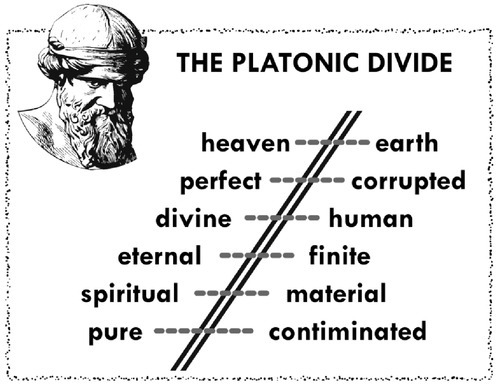
Jesus understood legislating Platonic ideals was an exercise in futility.  People evolve and mature into living those ideals.  Our Bishops seem to have a different less 'human' understanding--especially when it comes to sex and women.


I have to admit I have found the religious conscience exemption brouhaha over birth control to be utterly fascinating.  There have been millions of words written on this topic in the course of the last month.  Too many of them utter hysteria, and most of those kinds of words coming from the mouths of Catholic Bishops.  I do agree with these bishops on one point, this has now become a battle with serious implications for religious freedom, who gets it, how far it goes, and whether conscience clauses are the domain of the individual or another ill advised extension of individual rights to corporate entities.

What I really hope is the Catholic conversation gets much deeper, goes beyond the religious freedom debate and into the heart of matter.  I can not get past the fact that at this moment in time everything uttered by our Catholic leadership is sexually oriented.  It doesn't matter if it's the dissembling about the clergy abuse scandal or gay marriage or abortion or now the current birth control debate.  The Catholic conversation is about sex.  For a while the Liturgical changes took center stage, but inevitably the hierarchical conversation always comes back to sex, and always about sex as it pertains to women and gay men--which really means men who act sexually like women.  Rarely, if ever, do we hear anything about sexual morality as it applies to straight men--see the recent Catholic convert and multiple adulterer Newt Gingrich.

All this talk about controlling the sexuality of women and gays sends one incredible message about Catholic spirituality.  That message seems to be the if humanity can 'control' their sexual urges they become instantly spiritual.  Unfortunately that's not true.  Usually humanity becomes emotionally and spiritually stunted because their sexuality never gets integrated into the totality of their person.  They are always at war with a very deep and powerful aspect of the human condition.  Spiritual peace is very difficult to achieve under this set up--as is any form of real wisdom and maturity.

The even deeper message is that straight men can only become more spiritual by forcing women to be the controlling agent of male sexuality.  In heterosexual marriage it's women who have the moral mandate to say "NO", but not the physical or psychological strength to enforce it.  Historically this arrangement has worked out terribly for millions and millions of children who weren't wanted or couldn't be supported by either of their biological parentsI know, I work with the 'fruits' of this arrangement every single day.  I tire of hearing my clients say they would have been better off aborted or never born.  I should probably mention here that my clients are the sickest of the sickest.  For the most part they are the mentally ill who have been sexually and physically abused as children, born of addicted or mentally ill mothers, abandoned by their biological parents, and raised in the children's institutional system.  They wouldn't recognize real love in their lives unless it was accompanied by a kick in the head.  Too many of them were raised Catholic.

Forced sexual discipline is not spirituality, especially when that forced discipline is only directed at one gender. It's just an exercise in male self delusion.  Jesus didn't address individual sexual morality except in context of marital infidelity.  If there's a message there it isn't about birth control, and it isn't about gay marriage, and it isn't about abortion.  It's about marital infidelity and casting stones at 'others'.  People don't become saints because they don't engage in sex.  They become saints by relating deeply with others and not demanding sexual gratification as an inherent right or without accepting the responsibility for the consequences. 

The fundamental flaw in this whole Catholic debate is our sexual morality is being written and 'enforced' exclusively by  male celibates who think sexual continence is some how related to 'holiness' and who seem to firmly believe that unless men take vows of chastity on behalf of and under the direction of Holy Mother Church  it's up to regular unholy women to set the boundaries on the sexual lives of the less devoted males.  It's no wonder real life men and women have utterly rejected Humanae Vitae and roll their eyes at JPII's Theology of the Body.  Those two papal teachings might work well in some Platonic world of absolute ideals, but that's not the world lay Catholics actually live in.


Tuesday, January 24, 2012

Some Thoughts On Catholics Crossing Rivers And Catholic Hemispheres

Archbishop Lois Antonio Tagle of Manilla may lead the both the Philippine Church and the global church through some interesting times.


In all the coverage of Benedict's creation of the Anglican Ordinariate I've never found any numbers about the influx of Catholics into the Episcopalian Church.  Instead I've found glowing reports about the influx of Anglicans into the Catholic Church through Ordinariate.  This is true whether the coverage is from mainstream media or Catholic media such as America, Commonweal, or the NCR.  It's always about those Anglicans/Episcopalians coming in, and dead silence about the route out.  The following excerpt is taken from Episcopal Cafe and lo and behold, it gives the statistics for the boats on both the Tiber and the Thames.

.......Thus far, 100 priests and fewer than 1,400 people in 22 church communities have expressed an interest in the ordinariate. Gather them all in Washington National Cathedral, and the place isn’t half full. Only six of these 22 communities have more than 70 members, which suggests that their longterm viability may be an issue. And there is no evidence to suggest that these small congregations are the thin edge of an as yet invisible wedge.  (If 16 of these communities have less than 70 people then the long term viability of the Ordinariate should be a concern.)

The prominence the ordinariate has achieved in the media has unsettled some Episcopalians. As a denomination, we are still recovering from several years worth of news stories in which the departure of some three percent of our membership for a more theologically conservative body was variously described as a “schism” or an “exodus.”

In part to bolster Episcopal spirits, and in part to provide reporters with some sense of perspective, I thought it might be helpful to take a look at some numbers. According to the 2004 U. S. Congregational Life Survey—which I believe is the most recent one available—11.7 percent of Episcopalians were formerly Roman Catholic.

The Episcopal Church had slightly fewer than 2,248,000 members in 2004, indicating that not quite 263,000 of its members were former Catholics.


The Episcopal Church has shrunk some in the last seven years, and now has about two million members. Assuming that the percentage of former Catholics in the Episcopal Church has remained constant (I think it is likely to have risen, but that’s an essay for another day), there are currently some 228,000 former Roman Catholics in the Episcopal Church.  (I would think the percentage has risen as well and that the influx of Roman Catholics has had somewhat the same effect Latin immigration has had for Catholicism.)

There may be a good reason that the departure of fewer than 1,500 Episcopalians to the Roman Catholic ordinariate deserves extensive media coverage while the departure in recent years of more than 225,000 Roman Catholics to join the Episcopal Church goes unmentioned even in stories about the creation of the ordinariate, but I don’t know what it is.


The stories on the ordinariate also report that as many as 100 priests—many of whom may be Episcopalians—have also applied to join the ordinariate. Is this evidence that the Catholic Church is winning priests from the Episcopal tradition? It reads that way, unless one knows, thanks to the Church Pension Group, that 432 living Episcopal priests have been received from the Roman Catholic Church.

****************************************************

For all the ballyhoo surrounding the Anglican Ordinariate the truth is the river flowing out of Catholicism and into the Episcopal Church has a whole lot more traffic in both clergy and laity.  There is plenty of reason to think this isn't going to change in the near future, especially in North America and other Anglo countries in which both Catholicism and Anglicanism are historic churches.  As for the developing South, well, that is going to be a very different story.

The Catholicism of the South is not the Catholicism of the North.  The same is true for Protestant Christianity.  In the North the talk is of reform and a return to a less hierarchical and more inclusive Christianity which includes acceptance of homosexual unions, an ordained ministry for women and the openly gay, a relational approach to sexual morality, and all of this with an emphasis on the individual spiritual journey rather than the collective identity approach of our ancestors.  None of this is on the radar of Catholicism in the South where traditional sexual and gender roles are sacrosanct, patriarchal authority holds cultural sway, collective spirituality is what gives life to the individual journey, and the miracles, exorcisms, and Divinity of Jesus are not just literal truth, but the main point of discipleship.  In some respects this is a Catholicism that is about a 'return on one's spiritual investment', especially in areas in which the modern western approaches to healing and mental illness are few and far between or economically beyond the reach of the poor and impoverished.


There's certainly no question that the Catholic tradition supports these notions of healing and exorcism, and the power of the Virgin Mary, the Communion of Saints and Angels, and Charismatic practices flourishing in the South.  It was in these beliefs that missionaries connected with the original indigenous populations. And it's equally true that the long Catholic tradition has very little support for any notions of gender equality, gay unions,  a relational sexual morality, or a less authoritarian clerical structure.  It would seem then that global Catholicism will not reflect the reforms hoped for by progressive Northern Catholics.  The river into the Episcopalian/Anglican Church will stay quite congested.

At first glance the future for Catholicism appears to be centered in the exploding Catholic South where traditional piety, traditional sexuality, and traditional forms of male hierarchy hold sway. This would be especially true in the poorer urban areas with a high population density from rural immigration.  Maslow's hierarchy of needs is at it's most base level in these situations.  Ideas which need  freedom from physical survival angst don't come up on any one's radar---like women's ordination. However, ideas which do impact one's physical survival do hit the radar screen---like women's access to birth control.  

This is one reason I closely follow the debate in the Philippines between the hierarchy and the government over women's access to birth control. This is one place where the Vatican plan to use the South to sustain it's current structure and theology is clashing head on with the actual needs of people in the pews. In a real sense, the Philippines is a Southern hemisphere clash of wills over Humanae Vitae and the celibate male authority that teaches it.  This battle played out in the North almost fifty years ago and much of the call for reform began with it's utter rejection by the laity.  The Bishops and their supporters have managed to keep the bill from being finalized for some ten years, but it finally appears the tide is turning because women and young Filipinos have had enough and together they represent a lot of votes.  There is a growing sense of moral betrayal by the hierarchy in the Philippines which may be one reason the Vatican appointed Louis Antonio Tagle, something of a pastoral moderate, as Archbishop of Manilla. 


If the Vatican is truly banking on the South to sustain it's power and prestige Benedict and JPII certainly had different ideas about how that should play out in the Vatican itself.  JPII had a College of Cardinals that was  40% from the South and Benedict has almost totally reversed that trend. I wonder if that's not because the flavor of the Church in the South appealed more to JPII the Mary worshipping Polish mystic than it does to Benedict XVI the German intellectual theologian.  In some respects, Pope Benedict is presiding over a global Catholicism for which neither the pentecostal South or the rebellious North have much appeal.  No wonder he's rumored to be considering retirement.  


If we've learned anything from the Arab Spring it's that today's youth are very well connected with access to all kinds of information, that the Internet/cell phone explosion is creating something new in collective humanity, and that it won't be easy for existing power structures to deal with the change this implies.  The Vatican is not immune to this.  Catholicism was the first truly global social entity, but if it wants to maintain relevance in today's global world, it can no longer afford to think in centuries.  We can make pretty accurate predictions about the demographic look of the Church fifty years from now, but how that demographic will practice Catholicism is another thing entirely.  One thing for sure, it won't be in any Anglican ordinariate.


Monday, January 23, 2012

A Well Formed Conscience: The Topic Of The Day

This photo has always bugged me and now I know why.  Anyway, it doesn't have much to do with the post, but it is a great papal guilt trip.


The NCR has just posted an article by Santa Clara University ethics professor David DeCrosse.  It's probably the best explanation I have read delineating where the USCCB is coming from in their definition of conscience as opposed to where I am coming from--except for one thing.  Catholic reasoning on conscience has always placed a huge emphasis on authoritative teaching and personal practical reasoning.  I've always felt this was incomplete no matter which aspect a given Catholic gave pre-eminence.  Jesus added practical compassion to the reasoning part, and most certainly gave place of primacy to the spirit behind a given law rather than the words or the speaker of the law.  Laws promulgated and/or acted on without compassion are a form of tyranny, not justice.  Just think back to the nine year old girl in Recife, Brazil, or Sister Margaret McBride in Phoenix.


Later on in this essay--I have only extracted a number of paragraphs which explain the reasoning of our bishops--David DeCrosse quotes one of my favorite lines from A Man For All Seasons.  It's the one in which Sir Thomas More speaks about man's role as serving God in the tangle of one's mind.  When I was much younger that really spoke to me, but as I've matured I would change it.  The real service comes from serving God in the tangle of one's heart.  Now to David DeCrosse:

......With this emphasis on law, the distinctiveness of the bishops' model of conscience comes into view. Where a theologian like Thomas Aquinas speaks of conscience combining obedience to moral law and the exercise of practical reason, the bishops heavily favor the former over the latter. On the one hand, this means that conscience is best understood as the way by which we adhere to the moral laws requiring respect always and everywhere -- in the bishops’ eyes especially meaning turning from what they call the “intrinsic evils” at stake in the use of the artificial means of birth control; in gay marriage; and in taking innocent human life from conception onward. On the other hand, the bishops’ emphasis on law as the pre-eminent category of conscience means that they leave little room for practical reasoning to help the conscience figure out what to do in the face of complexity. Practical reasoning, in this view, is wishy-washy, feckless, diluting the clear demands of the moral law. Or, as Bishop Thomas Paprocki of Springfield, Ill., said when explaining why Illinois bishops did not seek an exemption from a state law legalizing civil unions for same-sex couples that could have required Catholic Charities to place foster children with such couples: “It would have been seen as, ‘We’re going to compromise on the principle as long as we get our exception.’ We didn’t want it to be seen as buying our support.”  (God forbid the USCCB be seen as selling out to both the left and the right.)

What has led to the diminished role for practical reason in the way the bishops understand conscience? Two key conceptual matters come to mind, both taken from concerns laid down by Pope John Paul II and Pope Benedict XVI. One is the sharp opposition to the “creative conscience” outlined by John Paul II in the 1993 papal encyclical called “Veritatis Splendor.” In that document, John Paul criticized any number of developments in Catholic moral theology including one that argued that conscience’s use of practical reason in the face of a host of particulars could lay the basis for claiming occasional exceptions to the otherwise universal mandate of the moral law. But the pope said that this view of the “creative” possibilities of conscience had things precisely backwards. It’s not the creative use of practical reason that should determine what is morally required in a particular situation. Rather, it’s the moral law -- “requiring meticulous observance,” as John Paul put it -- that determines what reason should conclude that a particular situation demands. In “Veritatis Splendor,” John Paul was taking aim at theologians working in the area of interpersonal and, especially, sexual morality. But, I believe, his powerful views have shaped the position of the bishops on the current matters of conscience, which pertain primarily to issues of sexual morality in a political, not interpersonal, context. (For JPII obedience trumped reason each and every time in each and every situation.  All hail the Catholic Borg.)

Along with the “creative conscience,” John Paul also condemned what he called the belief that complex situations could yield a “double status of moral truth.” In fact, the issue of “double status” is another way of articulating what is at stake with the use of the “creative conscience.” The notion of “double status” holds that while there may be one truth at a doctrinal or abstract level, there may be another truth -- even one proclaiming an exception to a doctrinal truth -- that emerges in the face of the complexity of concrete conditions. As with the “creative conscience,” John Paul dismissed this notion outright. Moral truth is not divisible and, anyhow, the clarifying truth of the moral law holding always and everywhere tells us pretty much everything we need to know about what any concrete situation requires. (Had Jesus subscribed to JPII's thinking, the woman caught in adultery most certainly would have been stoned with Him throwing the first stone.)

But the issue of the “double status of truth” is not only an intra-Catholic matter of moral theology. Instead it also must be considered in light of the overwhelming emphasis of John Paul and Benedict on the threat to truth spawned by what they regard as the runaway relativism of Western democracies. And this brings us to the second conceptual factor behind the bishops’ reduced emphasis on practical reason in the exercise of conscience: The fear that human reason in a democracy like the United States is so damaged by relativism and sin that it is all but incapable of attaining moral truth on its own via an exercise of practical reason. John Paul argued that this dismal tendency of human reason was at the heart of the contemporary “culture of death” at work in a place like the United States. Benedict has similarly decried what he has called the way that human reason all too often does not accept truth because it does not really want to know it. Faced with such a negative judgment about the capacities of human reason, what is the Catholic conscience to do? Among other things, not assume it has the rightful freedom to exercise too much practical reason in the face of the complex circumstances of democratic life. In the eyes of the Catholic right, this was the downfall of those Catholic Democrats in Congress in 2009 who invoked their own prudential judgment to cast the decisive votes in favor of federal health care reform -- and who, in doing so, defied the official opposition of the American Catholic bishops to the bill on the grounds that it would violate the moral law against abortion.


It is important to note that the close link of conscience and the moral law speaks poignantly to the transcendence of the human spirit. The Arab Spring in 2011; Poland in the 1980s; Selma and Birmingham in the American South in the 1950s and ‘60s: The people in the streets in these times and places moved the conscience of the world because they witnessed to a demand for justice that always and everywhere surpasses the claim of oppressive power. By contrast, the problems of conscience now facing American Catholic bishops have nowhere near such stark dimensions. And this is true no matter how often some bishops and their allies on the religious right liken contemporary gay activists to the Ku Klux Klan (as did Cardinal Francis George of Chicago) or see in President Obama the alien spearhead of a war against Catholics (as did columnist Michael Gerson writing in the Washington Post).............

********************************************

DeCrosse's article is well worth reading in it's entirety, as are the comments which follow.  Whether or not the USCCB intended to do so, the topic of conscience is well and truly on the minds of a lot of Catholics.  I personally think this is excellent as the spiritual path is all about serving God through the choices we make in the tangle of our minds and hearts.  Spirituality is not about obedience to authority.  Religion is about obedience to authority.  Spirituality is about going with in and forming an integrated self in union with the Divinity in one's eternal soul.

DeCrosse also touches on another of my pet peeves with this line:
 The fear that human reason in a democracy like the United States is so damaged by relativism and sin that it is all but incapable of attaining moral truth on its own via an exercise of practical reason."  This irritates me because the Church in which both Popes Benedict and John Paul II matured failed humanity miserably for the just the opposite reasons.  It blindly supported fascist autocrats which resulted in the utter devastation of Europe and the deaths of millions during WWII, and that Church did so without uttering anywhere near the condemnation of dictatorial fascism the last two popes have uttered about secular democracies.  To describe the current Western democracies as 'cultures of death' is laughable given what happened under fascism.  As one commenter mentions after this article, it is no wonder that the Church in Europe is more or less an empty shell.  The Church lost any claim to any kind of moral authority during WWII, and it's rapidly losing any claim for moral authority in rest of the world because of it's criminal handling of it's own morally depraved priests and it's continuing support for autocratic right wing ideologues in Africa and Latin America.  Of course this is the kind of thing that happens when obedience to authority is given a higher place of importance than compassion towards one's fellow man.  

For me the battle for the soul of Catholicism revolves around personal conscience and what will be the driving value in the formation of that conscience.  The past two Popes have emphatically demanded that value be obedience, but I firmly believe Jesus demanded that value be compassion.  My own personal experience has shown me time and again that compassion bears more positive life changing fruit than reflexive reliance on authoritarian control.  Unfortunately, the current clerical system isn't set up to demonstrate the value of compassion to it's members.  Obedience, well that's a different story.  That virtue is the reason the individual members of the USCCB are where they are and get to tell us what they do.

Sunday, January 22, 2012

Irish Church Leadership Return To The Past To Find A Clerical Future

It's kind of strange to view Pope Benedict in a suit and tie, but then this was back in the days when he was unafraid of the vision of the Church articulated by Vatican II.  He looks downright dashingly secular.


Eugene Kennedy currently has a piece at the NCR about the recent decision of Irish bishops to remake Maynooth seminary into a more monastic setting.  The idea according to the rector is about "trying to get the balance right between the need for the seminary to be a distinctive prayerful community and ensure that the seminarians have all the benefits that the Maynooth campus has to offer."  In my own mind I didn't make the initial connection that Kennedy did with prisons.  I made the connection between the residential situation of big time college athletic programs and this seminary idea. Isolating young men from their peers seems to be a tried and true method for authoritarian male leadership to enculturate their pet values in their captive audiences.  The truth is that these kinds of artificial living situations don't lead to any kind of 'balance', they lead to the creation of serious imbalances in the maturation in some members of the captive audience.  The graduate school I attended has recently admitted they might have a problem with rape in their football program after the latest allegation involved three football players in a date drug gang rape. 


I've never been a fan of isolating young adults by gender or age or activity.  Where as these kinds of living situations might not be detrimental for most young adults, for others it is seriously detrimental as it can create all kinds of victims and enhance the worst aspects of these distilled cultural milieus.  That's one thought I had, but Kennedy had one paragraph in his piece I think deserves to be immortalized:

In short, the Irish bishops think they are solving a problem whose roots can be traced back to the isolation from the healthy experiences with others that characterized the supposed golden age before Vatican II spoiled everything by reminding the church that its whole purpose was to embrace the sinful world and relieve its suffering rather than to push it away like a leper whose suffering might contaminate it.

Those lines just really struck me as getting to the root cause for the 'reform of the reform'.  Vatican II had to be respun precisely because it spoiled everything by reminding the church that its whole purpose was to embrace the world, not push it away. It really doesn't surprise me that our current Pope is the biggest champion of this reform, because virtually his whole life after WWII has been spent in a clerical world designed to keep him safe and secure from the leprosy of secular contamination.  In some respects it appears he's substituted Hitler's demands for protecting the "fatherland" from the contamination of non Aryans with protecting Holy Mother Church from secularists and atheists.  It's really a juvenile boy thing, not a mature man thing.  I've seen this retardation of male maturity play out over and over again in numerous different settings and it's always at the expense of women and the least powerful.  It's the human version of the juvenile male elephant phenomenon.  It needs to be eradicated from Catholicism, not resurrected.


Monday, January 16, 2012

The Power Of The Minority In Pursuit Of It's Own Survival Is Not About Faith

Not a particularly banner headline in global Catholicism.


Fr Richard McBrien's latest NCR post makes a couple of really important points about the period just after the Second Vatican Council.  He brings these points up in reference to the Year of Faith Pope Benedict has instituted for October 2012 to November 2013.  The last Year of Faith was called by Pope Paul VI, and that one did not turn out to be all that good a year for anyone's faith, least of all PP VI.  The following is an excerpt of the original post.


......This is not the first time the church has been called to celebrate a Year of Faith, Benedict XVI pointed out. His predecessor, Pope Paul VI, announced one in 1967 to commemorate the martyrdom of Saints Peter and Paul.


Unfortunately, it began almost a year before the lowest point of his pontificate; namely, the publication of his last encyclical, Humanae Vitae ("Of Human Life") in July 1968 -- "last" because Paul VI was so taken aback by the negative reaction to the encyclical that he vowed never to write another one, and he did not.
The encyclical had declared that contraception is always seriously sinful. The central words that Paul VI used were that "each and every marriage act must be open to the transmission of life" (n. 11). (I sometimes wonder if the JPII generation actually understands how vehement the reaction was to this encyclical. It wasn't just a case of 'self centered' laity reacting--it was across the Catholic spectrum and included the vast majority of bishops. Unfortunately for laity, loyalty to the Vatican trumped personal conscience in way too many of these leaders. It sent a very loud message to Catholic laity about how far 'subsidiarity and solidarity' went between bishops and flock--as in nowhere.)

One might also place the publication of Paul VI's Credo of the People of God, which concluded the Year of Faith in 1968, as a distant second in relation to Humanae Vitae as another low point in his pontificate.
Benedict XVI said the Credo was "intended to show how much the essential content that for centuries has formed the heritage of all believers needs to be confirmed" (n. 4).

The Credo of the People of God was issued on June 30, 1968, just under a month before the release of Humanae Vitae, on July 25.


In my column for July 19, 1968, I wrote: "Insofar as this document allows the views of one particular school of theology (a minority view, let it be added, that was clearly rejected at Vatican II) to intrude itself upon the ground of authentic Christian tradition, the 'Credo' has transformed itself from an expression of common faith binding the whole Church together, into a personal brief on behalf of one party in the current theological debate." (Six days after Fr McBrien pens these prophetic words Humanae Vitae was released and we all learned just how much power that 'one party in the current theological debate" had in the Vatican.)


On the other hand, Benedict XVI did well to begin his own Year of Faith on the 50th anniversary of the opening of Vatican II to "provide a good opportunity to help people under-stand that the texts bequeathed by the council fathers 'have lost nothing of their value or brilliance' [John Paul II, Novo Millennio Ineunte, n. 308]" (n. 5).

And he concluded his apostolic letter on a very high note. He made it clear, in typically Catholic fashion, that faith without works is dead (James 2:14-18). He also cited Matthew 25:40: "As you did it to one of the least of these my brethren, you did it to me."

"What the world is in particular need of today," Benedict XVI wrote, "is the credible witness of people enlightened in mind and heart by the word of the Lord and capable of opening the hearts and minds of many to the desire for God and for true life, life without end" (n. 14).

********************************************

I find myself in disagreement with Fr McBrien about Benedict's thoughts as quoted in the last paragraph.  I would word it differently. "What the word is in particular need of today is the credible witness of people enlightened in mind and heart by the Law of Love and capable of opening the hearts and minds of many to the desire for God's love and for the true life that comes with that Love."  Too many people already think they know everything there is to know about the word of the Lord and use those words to engender hate.  We don't need any more of that.  We have had enough of that.....and enough of the rules and doctrines those Words of the Lord have generated in an attempt to control the rest of us.


The minority theological view that McBrien references in the above was perfectly exemplified in Humanae Vitae.  The Law of Love is based in compassion and and in the idea of growth towards a fuller understanding of God's love and how that love is expressed amongst each other.  Humanae Vitae was the antithesis of that understanding, reducing sexuality to it's base biological function, utterly devoid of the concept of compassion and divorced from any notion of relational love.  I sometimes find myself laughing when PPVI is called 'prophetic' because of some of the observations in Humanae Vitae.  It didn't take a prophetic genius to predict once married couples could actually plan for their children that they wouldn't have a dozen children and that the birth rate would fall to or below replacement levels.  That was the whole idea in the first place.  

What didn't happen was any forward thinking political solutions to deal with that very predictable demographic fact.  The one obvious solution is immigration and population redistribution, but of course, that means white hegemony is dead in Europe and soon to be in North America.  For all our Christian love, we can't be havin' that. Pope Benedict must not want that either if his recent batch of Cardinals is any indication.  The truth is the last thing Mother Earth needs is relatively wealthy white consumers having more hordes of relatively wealthy white consumer children.  There is not enough Mother Earth to sustain that level of consumerism.


All of which brings me to Martin Luther King day. This was a man who was well on the path to understanding the Law of Love and the incredible demands it places on evaluating our attitudes towards our fellow travelers on the road of life.  The Law of Love demands we see our fellows travelers exactly as we see ourselves. There are no 'others'.  There is only 'us'.  That is a very difficult command to follow because we have to shed all the years of conditioning which have told 'us' we are 'us' because we are not 'them' and 'they' are not 'us'. Every time I read of some Bishop or another who is defining Catholicism against one or another 'other' of the month, I want to cringe. All of this is utterly antithetical to what Jesus taught and lived.  This is not love.  This is not Faith.  This is plain old fear.


Monday, January 9, 2012

Pope Benedict Continues To Create The Church In His Own Image And Likeness: White European Male

Not exactly a picture of representative demographics for a global church. A whole lot of red and a whole lot of white--and of course, no women at all.


I've been meaning to post on the recent appointments to the College of Cardinals because I found the appointments mind boggling.  Two, just two appointments from the South, just makes no sense.  Catholicism is exploding in Africa and South East Asia but instead of even a token attempt to represent that fact in the College, Benedict adds 18 white European and North Americans out of a total of 22 appointments, and 12 of those are Vatican bureaucrats.

The following excerpt is from John Allen's NCR piece and deals specifically with this issue of global representation:

.......During his recent trip to Benin, his second voyage to Africa as pope, Benedict XVI praised the African continent as a “spiritual lung” for humanity and pointed to it as a critically important zone for the future of the Catholic church.


Yet in the appointments announced today, Africa was conspicuous by its absence.
In the run-up to today’s announcement, it was widely believed that at least two Africans would be on the list: Archbishop Telesphore George Mpundu of Lusaka, Zambia, and Archbishop Cyprian Kizito Lwanga of Kampala in Uganda. In the end, however, neither made the cut. (The Philippines was also conspicuous for it's absence, and their one voting Cardinal turns 80 this year.)

At the moment, there are eleven Africans among the voting-age cardinals. Once the Feb.18-19 consistory takes place, there will still be 11 Africans, alongside 11 cardinal electors from the United States alone – despite the fact that Africa has more than twice the Catholic population of the United States.
In November, the number of African electors will drop to ten, as retired Cardinal Francis Arinze of Nigeria turns 80.

Part of the problem may be that Benedict’s picks today were disproportionately skewed to Vatican officials, and the two Africans who hold senior positions in the Roman Curia are already cardinals: Peter Turkson of Ghana, President of the Pontifical Council for Justice and Peace, and Robert Sarah of Guinea, President of Cor Unum.

In general, today's nominations reinforce the dominance of the West in the College of Cardinals. Only three of the 18 new electors come from the developing world -- one Brazilian, one Indian, and one from China (Hong Kong). In that sense, the College of Cardinals will continue to be unrepresentative of Catholic demography, given that two-thirds of the 1.2 billion Catholics in the world today live in the global south, a share projected to rise to three-quarters by mid-century.  (The designate from Brazil has spent the last twenty or so years in Rome, so he might just as well be added to the tally of Vatican bureaucrats.)

****************************************

Allen never does offer any real explanation for Pope Benedict's choices, which leaves the field wide open for me to speculate. I can't help but speculate that Benedict has spent way too much time in the Vatican and for him the real Church is the white Eurocentric Vatican and the global church has some nice places to visit, but isn't 'mature' enough to participate in ruling the Church.  Some people might see this as a continuation of colonialism.  I would be one of them. 

It's almost like Benedict is terrified that he will go down in history as the Pope who presided over the demise of the Church in the West.  Numbers don't lie and in spite of all the talk of the New Evangelization, he IS presiding over the demise of the Church in the West.  Stacking the College of Cardinals with Western, mostly Italian technocrats, is not going to change this fact, and does nothing to further the advancement of the Church in the South. 


There is also something else that is nagging at me about these appointments.  If the priority is to protect the wealth of the Church it makes sense to appoint a pack of Italian and North American Cardinals, people who are joined at the hip to Western economic power.  In that case giving a red hat to Wall Street's favorite Archbishop makes more sense than giving one to Dublin's thorn in the Vatican side, or Westminster's Archbishop Nichols who seems to be one of the few Western Catholic leaders who sees gay marriage for the red herring it is. In the meantime the two thirds of the Catholic world who aren't invested in Wall Street or Fleet Street will just have to deal with the fact pastoral ability is not an apparent qualification for appointment to the College of Cardinals.