Monday, April 16, 2012

The Empire Continues To Strike Back

Fr Sean McDonagh and other members of the Irish Association of Catholic Priests find themselves defending another silenced priest.
And yet another story about another Irish priest silenced by the Vatican.  Last week it was Fr Tony Flannery was sent to a monastery to rethink his theology, and this week it's 84 year old Marist theologian Sean Fagan,  who was silenced by the Vatican in 2010, and sworn to secrecy about his silencing or face prohibition from exercising his faculties.  This Vatican action appears to have been brought about by some of his writing on moral theology, his statements regarding the abuse crisis in Ireland, and statements calling for married and women priests.  

Is the idea of adding women and married priests to the priesthood so awful that bishops and priests who speak about these issues are silenced, fired,  and sent to monasteries, but pedophiles and abusers are still protected and forgiven?  This sort of insanity beggars belief.  Again, I find myself utterly stupefied and ashamed of this corrupt and clueless hierarchy.

Priests' group rallies behind cleric silenced by hierarchy


By Luke Byrne - Irish Independent - Monday April 16 2012
AN organisation representing hundreds of priests last night described the silencing of Fr Sean Fagan over his writings as "outrageous".
The 84-year-old Marist priest was ordered to stop writing and commenting in public after he had called for an inquiry into clerical sexual abuse in all dioceses of the State.
All available copies of a theological book written by Fr Fagan were also bought up by his religious order and he was required to give an undertaking not to write again.
The move came after he had advocated allowing women and married men to be ordained as priests.
Last night, Fr Sean McDonagh of the Association of Catholic Priests said the silencing of Fr Fagan was "just outrageous". He accused the church of "throwing a fatwa" at the priest and said that some of the church's recent actions were like a return to the Inquisition.
"This isn't the time for heresy hunting," Fr McDonagh said. He added that Fr Fagan was clear, well written and interesting and that he had wanted to start a conversation about the church's views on sexuality.
Fr McDonagh said that he believed that the silencing of priests by the Vatican was out of a desire for "control", rather than because of sincerely held belief or intelligent argument.
A spokesman for the Irish bishops last night refused to comment and referred the issue to the Marist order.
Calls to a superior of the order by the Irish Independent, which was seeking comment, went unreturned last night.
In January 2010, following the publication of the Murphy report, Fr Fagan argued that all dioceses within the State should be examined.
He said the church should begin with "the three As" approach -- to admit, accept and adjust.
This was among the last public comments he made before he was silenced three months later, following an anonymous complaint made against him to the Vatican.
Inquisition
Fr Fagan authored three books, including 'Has Sin Changed?', 'Does Morality Change?' and 'What Happened to Sin?'
In 2004 the Irish Bishops' Conference cited 'Does Morality Change?' as an example of an error in modern theology.
Following the publication of 'What Happened to Sin?' in 2008, Fr Fagan advocated the ordination of women and married men.
All unsold copies of the book were subsequently bought up by his order.

***************************************

At the rate the Vatican is launching verbal and written missiles at the Irish Church and it's priests, it won't be long before the Irish Roman Catholic Church becomes in fact the Irish Catholic ChurchFor all I know, that may be exactly what the Vatican wants.   


Emerging Churches And The Younger Generations

This is a Thomas Kinkade painting entitled "The Mountains Declare His Glory".  I thought I'd post this as memorial.  Thomas Kinkade died April 6th.


Huffington Post has a very well written article by Christian Piatt concerning young adults finding their Christianity outside of denominational churches.  Here are some of the reasons he finds for this trend:

The teachings of the church are seen as devalued. This doesn't have so much to do with the inherent importance or validity of what is being said, but rather it's a reflection of the value of information overall. It's really a matter of supply and demand. Abraham Lincoln probably wouldn't have walked so far to get a book from the only area library, after all, if he had Wikipedia and Google Books at his fingertips. Most anything being said, taught or preached about in a church on Sunday can be found somewhere else, wherever and whenever we want it. Why wait? (This point is one mainstream churches are going to have a hard time fighting.  The Internet site Catholic Answers probably has more interaction with young Catholic youth than any other Catholic endeavor. Why put up with the hassles of going to Church for answers when you can google for it.)

The institutions have outlasted their original purpose. Most of our churches were built when populations were static. People didn't divorce, change jobs and move around like they do now. This mobility, combined with the diversification of networking opportunities, on-line and through other means, puts bricks-and-mortar institutions in an awkward spot of hoping people find them where they are. And much of the outreach efforts of church is still an attempt to get people "in the doors." But the fact is that most young adults don't particularly care. (I also think this plays into the lack of participation of older generations.  Plus the doors are purposely closing on segments of the population.)

Our understanding of community has changed. This builds on the previous point, actually. Community used to imply a specific geographic focus, like a church, country club or lodge. All of these kinds of institutions, incidentally, are not what they used to be. Our understanding of relationship is different, and what we come to expect out of being connected to one another has evolved (or mutated, depending on your point of view) in both size and content. For example, I am still in contact with hundreds of folks from my past who are all around the world. A few years ago, we would never have heard from each other again. But I also don't have many close friends. Everyone's too "busy." People are increasingly wary of investing their limited time and resources into anything new, including other people. (At least in real time and space.)
 
 The above are basically practical considerations and have nothing to do with theology, dogma, or spirituality.  Mr Piatt ends his piece with a very insightful spiritual observation:


There's a question I ask nearly every congregation I get asked to come speak to. Before we get into any other real substance about congregational transformation, I ask them: "If you could realize your vision for the community today, right now, but it meant closing the doors of your church forever, would you do it?"
If the answer is "no," then the mission has taken a back seat to something more nefarious. If the answer is "yes," and if they are truly committed to doing WHATEVER it takes with their personal and material resources to live out the Gospel, then we have something to work with.

I'm not saying every church has to -- and will -- shut down forever in order to meet their new mission field's needs. But if we're not even willing to consider the possibility, it's we who have a distorted value system; and those young adults wary of our motives are actually right in their skepticism about us.

************************************************

What Piatt is describing is the attitude of the Emerging Church phenomenon.  It's been happening more and more in Catholicism as parishes are closed and disgruntled Vatican II Catholics feel moved to form their own small communities.  It seems reasonable to predict Catholicism will continue to move in this direction.  One of the benefits of belonging to an emerging church is one doesn't have to sit through sermons demanding pew potatoes march in civil disobedience against the very birth control they have consciously chosen to use.  Emerging churches tend to stay away from politics and concentrate on shared spirituality.

I got to thinking about this morning wandering around the yard.  I think the purist form of this kind of thing I have personally participated in was also highly seductive to young adults of many different Christian persuasions.  That was building and participating in a sweat lodge.  Three years ago I had an Assiniboine medicine man staying with me and he agreed to lead a sweat for a group of interested people.  About half the group were twenty something spiritual seekers.  What made this endeavor so attractive to them was the idea of actually constructing the sweat lodge as part of the ceremony.  It was like building their own church.  It took us about six hours to cut the willow, form the shell, cover the shell, tend the rock fire, and finish the various tasks needed to properly build a sweat lodge.  All the while we were doing this, Harry explained each and every step in great detail, and always stopped construction at the appropriate point for the necessary prayers.  By the time we actually began the sweat everyone was fully engaged.  It was a good experience and powerful ceremony, capped off by the ritually prescribed communal meal.  As an aside, it's amazing to me how communal meals seem to be part of virtually every spiritual system.  The participants returned every month until Harry had to go back to his Rez.  At the final sweat, the lodge was taken apart with the same care it was put up.  The willow, thoroughly dry by then, was burned in the last sweat fire and the area cleaned up so as to look as much like it did before we built the sweat.  As Harry taught, this completed another circle of life.

For the young adults this experience brought home to them the idea that spirituality is not dependent on a particular structure, so much as it is on the people who are part of the community.  What the community builds, the community can unbuild.  They will still stay connected in a different dimensional space---and yes, sometimes that different dimensional space is Facebook.

It's experiences like this that have taught me Catholicism will continue in some form or another because Catholics will eventually understand internalizing their faith is the real issue, not it's external forms of expression. 


Sunday, April 15, 2012

A Call For Civil Disobedience Which Utterly Mocks The Whole Idea Of US Catholic Protest

If I become a Catholic protester on July 4th, I'll be carrying the sign on the right.


When I read this article at the NCR on Friday I was completely astounded, so much so that I initially laughed.  Then I got angry.  Then this morning I read this post by Betty Clermont at Open Tabernacle and got even more angry.  If any bishop thinks Catholics are going to take to the street in their millions to protest  in the name of the bishops religious freedom, when most of us know it's really a protest in favor of their religious tyranny, they are mistaken.

Catholic Bishops Start 'Fortnight For Freedom' Initiative, Issue Rallying Cry For 'Religious Freedom'

By David Gibson - Religion News Service - 4/12/2012
(RNS) The nation's Catholic bishops are calling on the faithful to pray and mobilize in a "great national campaign" to confront what they see as a series of threats to religious freedom, and they are setting aside the two weeks before July 4 for their "Fortnight for Freedom" initiative.

The exhortation is contained in a 12-page statement released Wednesday (April 12) by the bishops' Ad Hoc Committee on Religious Liberty, and its chief concern is the Obama administration's proposal to provide contraception coverage to all employees with health insurance, including those who work for religious groups. (No, it is not about religious 'groups' It is about secular enterprises run under religious auspices, taking tax money, to engage in charitable, educational, and medical endeavors.  These endeavors are not the sole property of the Roman Catholic Church.)

The statement represents the hierarchy's latest effort to overturn that policy, and it includes an explicit threat of widespread civil disobedience by the nation's 67 million Catholics. (And when less than 250,000 of that 67 million partake in this exercise, will the media still insist they represent the entire Catholic perspective?)

"If we face today the prospect of unjust laws, then Catholics in America, in solidarity with our fellow citizens, must have the courage not to obey them," the statement says. "No American desires this. No Catholic welcomes it. But if it should fall upon us, we must discharge it as a duty of citizenship and an obligation of faith."
The document cites a number of other perceived threats to religious freedom besides the contraception policy, such as harsh immigration laws that could impede the church's social ministry and university policies targeting campus student religious groups.
The statement also makes a concerted effort to portray the Catholic campaign as bound up with the fight to defend American values from an overbearing central government. (Oh please, we are to exchange an over bearing central government for a over bearing theocracy controlled by Roman Catholic bishops?)
"What is at stake is whether America will continue to have a free, creative, and robust civil society -- or whether the state alone will determine who gets to contribute to the common good, and how they get to do it," the statement says. "This is not a Catholic issue. This is not a Jewish issue. This is not an Orthodox, Mormon, or Muslim issue. It is an American issue." (Uhhmmm, the US is a democracy run by a government and all governments determine the common good and who gets to define it---by definition.)
The "Fortnight for Freedom" covers the period during which the church calendar recalls "great martyrs who remained faithful in the face of persecution by political power," as the bishops put it -- such as John the Baptist, who was killed by Herod; the apostles Peter and Paul, who were killed in ancient Rome; and Sts. John Fisher and Thomas More, who were executed under England's King Henry VIII.

Religious progressives and church-state watchdogs quickly pushed back.
The Rev. C. Welton Gaddy, head of the Interfaith Alliance, argued that while he agrees there are genuine threats to religious freedom, the bishops' fight against contraception coverage means that "the Catholic Church's definition of religious freedom is one that is only concerned with its own beliefs and practices and makes no room for those whose views differ."

The Rev. Barry W. Lynn, head of Americans United for Separation of Church and State, noted that many church-affiliated agencies operate on taxpayer dollars and therefore should follow public policy guidelines.
"When taxpayers are forced to support sectarian agencies that refuse to meet the needs of women, gay people and other communities that's a real violation of religious liberty," Lynn said. "If the bishops want to run sectarian social services, they ought to collect the money from their parishioners, not the taxpayers."

In their statement, the Catholic bishops deploy both the soaring rhetoric of American patriotism and the vivid examples of Catholic martyrs in calling for two weeks of parish activities, devotions and public rallies that would begin on June 21 and conclude on July 4. By invoking martyrs and saints, the bishops aim to recall the church's sacred history of "resistance to totalitarian incursions against religious liberty." (Notice how they do not recall the numerous examples of saints who lost their lives in dissent with Church leadership. St Thomas More was just as disgusted with the Church hierarchy of his time as he was with Henry VIII.)

The bishops have grown increasingly concerned about the advancement of laws promoting or protecting gay rights, for example, and fear that churches and affiliated agencies that use taxpayer dollars will have to comply with nondiscrimination policies.

But it was the Obama administration's release of a policy mandating that all employers provide free birth control coverage in their health care plans that sent the hierarchy into overdrive. The bishops have couched the fight as a battle for religious freedom because they say they know Americans -- including the vast majority of Catholics -- do not agree with church teachings against contraception. (Exactly, which makes this ploy an attempt to get Catholics to coerce the State into enforcing institutional Church doctrine they don't agree with and to essentially work against their own individual consciences. Nice trick.)

The White House has proposed modifying the mandate so that insurance companies would provide the contraception coverage separately to employees and with no cost to the faith-based employer. But the bishops -- as well as their conservative allies in other denominations and the Republican Party -- say that accommodation is insufficient. (The agenda is much deeper and wider than birth control or dubious appeals to religious freedom.  See Betty Clermont's post.)

*******************************************

I would hope there is a huge Catholic push back on this 'exercise' in defending the religious freedom of our erstwhile bishops.  If the idea is to germinate a sort of civil war inside the Catholic Church this is one way to accomplish it.  Real Christian leadership would be concentrating on their own egregious failures, you know, the ones all over the news right now as demonstrated in spades in Philadelphia and Kansas City. But no, American Catholics are being called to follow these corrupt criminal bishops and protest against our own consciences, especially the interests of Catholic women, and against an administration that has put more tax money in the hands of Catholic institutions than any other government before it.

I can't help but think back to the protests of the 60's, in which Roman Catholic leadership was front and center on the immorality of the Viet Nam war and the military draft,  in civil disobedience against racial discrimination and Jim Crow laws, and advocated for the influence of Catholic social teaching on the war on poverty.  I can't help but remember the 80's when the USCCB issued letters against Reagan's nuclear build up, US secret military incursions, and for an inclusive and coherent pro life stance.  It's almost like all of this was from another world.  Of course in some senses it was.  All of this came directly after Vatican II and before the crackdown on regional bishops conferences by the papacy of JPII and the CDF of Cardinal Ratzinger.

The real fruit of the 'reform of the reform' is not about liturgy or doctrine.  It's about regaining power and centralizing authority so the men of the Vatican can keep playing their oh so Traditional political power games on the world stage.  Our US bishops are blatantly engaging in this behavior in their mad pursuit to prove their uber loyalty in order to join the clan of the red beanie.

Good thing today is Divine Mercy Sunday.  American Catholics could use some Divine Mercy.  They are getting utter nonsense from their bishops. 


Saturday, April 14, 2012

I think in our time, many are turning their back on Jesus self proclaimed churches precisely in order to follow Him.


The Irish clerical group, Association of Catholic Priests, commissioned a study on the attitudes of Irish Catholics to a slew of Catholic teachings and recent hierarchical changes.  None of the results are particularly surprising, but they certainly draw a concise picture of a laity out of sync with both current Catholic teaching and it's hierarchy.  The following article is taken from the Irish Times.
 

Church teachings around sexuality 'irrelevant to 75%' 

PATSY MCGARRY - Irish Times - 4/12/2012

The Church's teachings on sexuality have “no relevance” to 75 per cent of Irish Catholics or their families, a new survey has found.

It has also established that 87 per cent of Irish Catholics believe priests should be allowed marry, 77 per cent believe there should be women priests while 72 per cent believe older, married, men should be allowed become priests.

The Amárach survey also found weekly Mass attendance in Ireland, at 35 per cent, is one of the highest in Europe.

Commissioned by the Association of Catholic Priests (ACP), the Contemporary Catholic Perspectives survey was carried out among 1,000 Catholics throughout the island of Ireland over a two-week period in February.

Where the Church’s teaching on homosexuality was concerned, 46 per cent “disagree strongly”, while five per cent “agree strongly”. It found 61 per cent disagree with the Church on the issue while 18 per cent consider homosexuality immoral.

Where divorced and/or separated people in a second stable relationship are concerned, 87 per cent believe they should be allowed to take communion. Just five per cent say they should not.

Five times as many Irish Catholics believe the Church is subservient to Rome compared to those who believe it is independent, with more than one in four (or 28 per cent) believing it to be "completely subservient".

A small majority (55 per cent) believe that Bishops should serve for a fixed term while the remainder are divided between those who believe a bishop should serve until age 75, or for as long as the bishop likes.

Forty five per cent of priests and 63 per cent of lay people believe there should be more involvement of laity and priests in choosing a bishop. Just five per cent of lay people and 10 per cent of priests believe there should be less involvement.

A clear majority agree with the Church speaking out on issues while four out of five believe it should do so on social issues.

Clustering of parishes as a way of dealing with a shortage of priests is favoured by 60 per cent of those surveyed.

Where wording in the new missal is concerned half of those who are aware of it prefer the older wording, while 33 per cent find the new Missal more difficult to understand.

On the forthcoming Eucharistic Congress in Dublin, 56 per cent of respondents believe there is a value in it being held in Ireland. However, just one in 10 believe lay people in their parish were involved in preparations for the Congress.

Fr Sean McDonagh, of the ACP leadership team, said the findings showed the number of people attending Mass in Ireland was “higher than in most European countries.”

He said “recent remarks by Archbishop Diarmuid Martin on the CBS 60 Minutes porgramme that only two per cent attend Mass in some parishes, if taken out of context, might lead people to believe that Mass attendance in Ireland has completely collapsed. The survey shows that this is not the case.”

Fr Bobby Gilmore said the survey showed Irish Catholics wanted “compassion and tolerance rather than the defence of absolute positions”.

He said they wanted local input rather than central control, “a people’s Church rather than a clerical Church”.

Fr Gilmore added that “finding out where we are is always a first step in finding where we want to go”.

The survey findings are expected to be discussed at the ACP-sponsored conference Towards an Assembly of the Irish Catholic Church which takes place on May 7th at the Regency Hotel in Dublin.

********************************************


 In an article in the Irish Independent, columnist David Quinn asks a couple of pertinent questions.  First, does this survey suggest the Church should change some of it's teachings, or does this suggest the Church has done a lousy job of justifying certain teachings?  The second question is probably much harder for progressives to answer, and that is if whether these changes will actually have any impact on the exodus out of the pews.  Quinn cites all the protestant churches who have made these changes but who have not seen an influx into pews or really stopped the bleeding.  This leads to a third question: are institutional religions past their sell date except for perhaps a quarter of western people.  Is it no longer possible to make cosmetic changes and hold the interest of contemporary laity?


I think Fr. Bobby Gilmore who stated Irish Catholics wanted "compassion and tolerance rather than the defence of absolute positions" and that they wanted "a people's Church rather than a clerical Church", is on to some truth.  It's a truth well beyond any cosmetic changes to the static priesthood or the reworking of specific absolutist teachings.  This is a truth that contains with in it a different world view of man, of God, of religion and the spiritual truths religions contain.  It's about mankind evolving and changing and with that, a change in world view about themselves and their world and the kind of God that new world view implies.

A little compassion and tolerance and a lot less clericalism might provide the exact kind of atmosphere to seriously address the future of Catholicism.  The last two papacies have decided that the future of Catholicism lies in adhering to the current  clerical system and defending 'absolute' truths as determined by that clerical system.  The Irish survey corresponds with such surveys in most Western cultures.  This kind of religious authority and absolutism appeals to approximately 1/4th of the current population, and far less of the younger component.  The progressive denominations aren't faring much better, which leaves a little over 50% of the west unchurched and many of those describing themselves as spiritual but not religious.  

That population is intriguing to me and I would be very interested in knowing why they consider themselves spiritual and at the same time not interested in religion.  Religious denominations of all stripes might find some useful information from dialogue with this group of people because they would find many of their own former adherents in this group.  They might not like the answers, but never the less,  the information would be priceless.
 

Wednesday, April 11, 2012

The Mysterious World Of The Right Hemisphere Of Our Brains: Is This Where Jesus Lives?


As I blunder off to work today which means I probably won't post anything for the next three days or so, I thought I'd leave readers with a very challenging video.  I have written more than once that science is beginning to affirm mysticism.  The above video is about neuroanatomist Jill Bolte Taylor who describes what it's like to be in the middle of a massive stroke effecting the left hemisphere of her brain.  She describes life as it's experienced by the right hemisphere, which is very very different and may not be the same reality at all.

Mysticism appears to be a right hemispheric function as do a number of other human attributes.  Enjoy watching this because it leaves one wondering about a whole host of different things, starting with why do we need two brains which experience life so differently? 

Tuesday, April 10, 2012

Why Are The Shepherds Silent When The Sheep Are Getting Fleeced?


Since I work for a secular non profit with the least of the least, assuming I still have a job after medicaid cuts, I will make less that $125.00 more dollars per year under Ryan's budget.  Bill and Melinda Gates will make about $6 billion more.  Hmmm that's enough to run my non profit, which works with some 1400 mentally Ill clients, for 540 years.


At the inner most depths of my heart and to the chagrin of my head, the USCCB obsession with pelvic issues misses the real problems in the country entirely---and I think purposefully.  As much as Pope Benedict gives me heartburn, he hit the nail on the head with his encyclical Caritas in Veritate.  Why has the USCCB remained utterly silent about this encyclical and it's message for not just the US, but the entire world?  Are our bishops so enamored of rubbing elbows with the 1% that they have no concern for the 99% except for what we do in our bedrooms?  Here's a tweet for the USCCB:  The 99% has no desire to substitute bedroom gymnastics for economic survival.  It's hard to enjoy sex when you are worried you can't pay the rent for the bedroom.


The following excerpt was written by Daniel C McGuire for Religion Dispatches.  It's cogent and lays the arguments against the Ryan budget vis a vis Catholic social teaching very simply and very powerfully.

......Among the losers in the Ryan-Romney budget, are programs that help the 99 percent: medicaid, medicare, food stamps, health insurance (one-half of the $5 trillion in cuts over a decade would come from health care even though our health care potpourri is the worst in the developed world.) Other losers include: preschool programs, environmental and financial regulations, Pell grants, Head Start, and mortgage guarantees. (These numbers mean our health as a nation is only going to get much worse.)

As to winners, it is the bloated rich who get help they do not need and could never deserve. As Robert Reich reports, in 2010 15,600 super-rich households (the top 1/10th of 1 percent) got 37 percent of all the economic gains that year with the rest going to those in the top 10 percent. The Ryan budget defends greed over need. Extend the tax breaks and further deregulate the dogs of greed. And as for the military, ah yes, the military, Ryan said they did not ask enough, though they have never been known for modesty in their requests. With the military budget around $2 million per minute, there is no need to further feed that black hole in the economy—but feed it Ryan would. Kill-power is prized more highly than Head Start and Medicare. (How does any real Christian justify this kind of economic disparity?  I suppose it's by reminding us endlessly our job is to suffer life on Earth in order to enjoy heaven after death.)

Enter the Real Catholic Social Teaching
When the real Catholic social teaching enters the conversation it’s nothing less than a wake-up call to the modern world.

The cumbersome title of the Vatican document signals its bold mission: Toward Reform in the International Financial and Monetary System in the Context of Global Public Authority. The Westphalian model giving sovereignty to individual states made sense in 1648. It makes no sense now given the interpenetration of economies and technology and our shared ecological peril. Our current need is for a Declaration of Interdependence and a “public, supranational authority with universal jurisdiction.” Pope after pope call for a “true world political authority” and a “world bank” to preside over a “global, universal common good.” Nations need to “transfer a part of each nation’s powers to a world authority and to regional authorities.” (All of this makes perfect sense unless one is convinced the US has some sort of manifest destiny to rule the world at the expense of 99% of it's own people and the rest of humanity.)

What is called for is not a tyrannical despotic world authority. The Catholic tradition of “subsidiarity” means that nothing should be done by a higher authority that can be done by active participation at lower levels. Right-wingers like Paul Ryan grab that one word, “subsidiarity” and claim it supports their maniacal hatred of government. It doesn’t. It calls for a more active citizenship, not voter suppression. Internationally it calls for “a new model of a more cohesive, polyarchic international society that respects every people’s identity within the multifaceted riches of a single humanity.” The goal is a solidarity that would end poverty and obsessive reliance on military violence for security. (It's really a shame Pope Benedict won't consider the same kind of structure for the Church itself.  He might find if he did the USCCB might pay more attention to Caritas in Veritate.)

The Vatican document supports fair taxation, greed-controlling regulation and bailouts “with public funds” when necessary. It excoriates “neoliberalism,” the greed-is-good creed of the right wing. Maggie Thatcher used it, and when she entered office 1 out of 10 Britons was in poverty; when she left, 1 out of every 4 (1 in 3 children) was impoverished. Reagan was married to it—as are his worshiping successors—and the 99% continue to lose while the 1% gorge and the economy sinks. It’s not complicated. It’s dumb. And, as the Vatican says, it’s immoral.

Catholic social teaching is not wild-eyed idealism; it is a pragmatic realization that without the taming of greed and without poverty-ending sharing, we face global economic chaos.
To see that, just open your eyes.

 ***********************************************

How many more governments will we see fall into social chaos because their citizens can't afford food?  Odds are there will be a lot more.  Syria is now expanding their war against their own citizens across their national borders as evidenced by Syrian soldiers firing on refugees in Turkey.  This only begs the question about what happens to all those refugees once they get out of Syria, and Syria is just the latest in a list of Middle East countries whose people are drowning in oil but somehow starving at the same time.  How is this possible?  I seriously doubt saber rattling with Iran is going to answer this fundamental question when it has far more to do with how global wealth is distributed and how global corporations and speculators fix prices.

There is no doubt in my mind that Pope Benedict wrote Caritas in Veritate to be taken seriously.  After all there's no future for Catholicism in a world gone nuts with hunger that also happens to have gone nuts with small arms and light weapons.  All the US Bishops need do is look South to Mexico to see what happens when desperate people have lots of small arms and have taken up the drug trade for an occupation.  Not a pretty picture.

Really and seriously, given the global situation and our real domestic problems what do our bishops think they are doing with their anti Catholic religious freedom crusade and that crusade over......birth control? No wonder thinking Catholics can't take the USCCB seriously. Top all this off with ongoing never ending abuse scandal and it's no wonder very few take these guys serious.  Why should we?


News Flash:  Rick Santorum has dropped out of the Republican presidential nomination race for personal as well as political reasons. The personal reason was the hospitalization of his three year old daughter who suffers from Trisomy 18.  The political reason was his very likely losing his home state of Pennsylvania to Mitt Romney. Even though Rick did not endorse Romney, I doubt that we have heard the last from Rick and would not fall over in shock if Romney finally picks him for Veep.  Biden vs Santorum would at least draw some interest in Pennsylvania.  That is assuming the current trials and tribulations of the Philadelphia Archdiocese can be shoved off the front pages.  With their sexual culture warrior out of the race, it will be interesting to see if the USCCB ceases being vagina ideologues and takes a much wider view of things.
 

Philly At The Crossroads? Not When Both The Problems And Solutions Are On The Same Roman Road

As he did in Denver, AB Chaput is selling the Archbishops' Residence in Philadelphia.  It's a nice gesture but it ain't gonna solve the real problems in Philly or anywhere else.


Yesterday NCR posted an article written by Rocco Palma of Whispers in the Loggia fame.  In it he chronicles the coming evolution in the Archdiocese of Philadelphia.  Except it's not an evolution, it's devolution.  In the case of Philadelphia it's all about consolidation of the bricks and mortar aspect of the Church.  I guess this is Mr Palma's way of overlooking the sad fact this consolidation is directly due to the exodus of Catholics out of Philly's pews.  It's not just about a consolidation and selling off of material property, it's also about the real life loss of hundreds of thousands of Philly Catholics.  It sure looks as if the Archdiocese of Philadelphia will be exhibit number one for Pope Benedict's leaner and purer remnant Church.  The truly sad thing is that nothing will have changed in this leaner and purer remnant Church.  It will still be a breeding grounds for clerical abuses of all kinds unless the priests and laity of what's left of the Archdiocese demand something different.  In this respect, the ongoing priest abuse trials will keep this need for real reform front and center through 2012.  The following excerpt is the summary of the article:


.....As NCR went to press, advocates for local abuse victims were planning a Good Friday demonstration outside Philadelphia’s Cathedral Basilica of Sts. Peter and Paul to rally support for reform and keep their cause in the spotlight.

Surveying the last 14 months, a veteran pastor summed up the broad current of fatigue among Catholics with an exasperated, “What in the world will happen next?” The trial’s verdict remains in the balance, yet one significant outcome of the grand jury is already settled: The model of triumphalist clericalism that long defined American Catholicism’s “Last Empire” is dead, and something very different is beginning to rise in its place.
That’s not to say the new shape of things is clear -- it won’t be for some time, especially as the flock faces even more dramatic days over the weeks and months ahead.

After spending the last year in an investigatory “limbo,” final decisions on the fates of the 21 removed clerics are expected to emerge. And beyond the Lynn proceedings, a religious priest and lay teacher charged with abuse by the grand jury begin their trials in September, after which the civil litigation against the archdiocese will begin.

A considerable downsizing in bricks and mortar, however, is perhaps the most significant sign of the end of an era. Archbishop Charles Chaput has placed on the market the 13,000-square-foot mansion on nine acres where his predecessors have lived since the 1930s. (One thing about Archbishop Chaput, he never has gone in for this kind of ostentatious exhibitionism.  This isn't so much about a personal sacrifice for him as it is a symbolic statement for others.)

Despite the success of several appeals of school closings -- including a last-minute reprieve for four targeted high schools -- June will still bring the shuttering of 36 elementary schools.

And already under way is the first wave of an anticipated three-year process that could see the closing or consolidation of a quarter of the 268 parishes spread across five southeastern Pennsylvania counties.
Seven months on the job, Chaput’s tenure is shaping up as an uphill decade of gutting and rebuilding a 200-year-old apparatus. Like the last year, the road ahead won’t exactly be for the faint of heart.
Accordingly, both sides of my family are still coming to terms with the impending loss of the three schools that educated scores of our clan for the better part of a century. Even so, Mom was a bit more sanguine than before as the trial approached.

“It’s so horrible,” she said. “But at least it’s getting cleaned up.”

**********************************************

But what exactly is getting cleaned up?  I can think of two very important things that need cleaning up that won't happen under Archbishop Chaput because the Vatican won't let them get cleaned up.  The first is the dependency of the laity on the clergy for sacraments and salvation.  As long as their is a significant portion of Catholic laity who truly believe they somehow need a mediator for their relationship with Jesus the Vatican will not move one whit to change this spiritually immature dependency.  This dependency allows them to maintain the celibate male priesthood, whose lack of, is a major contributor to the loss of parishes and the exodus out of the pews.  For me personally, this refusal to adjust the sacrament of ordination to meet Eucharistic needs is just another criminal abuse of Catholic laity.  It continues because there is still enough of a remnant who truly believes the priesthood is necessary to their salvation.  It isn't.  The Eucharist is.

Secondly we need to move exactly in the direction that Vatican II was moving the Church.  We need to move to a communal understanding of Church in the world and away from the Church defended and separated from the world. Philadelphia, like many other dioceses, is moving in the exact opposite direction and creating mega parishes where the individual gets lost in the crowd.  Any real shepherd will admit that when the herd gets so big one cannot know and identify each animal, care suffers and the sick and needy are missed or overlooked.  At this point any honest shepherd reduces the herd or gets more shepherds, but Catholicism is going in just the opposite direction.  The herds are made bigger and the shepherds fewer.  There's another issue that bothers me about this.  The more isolated and powerless people feel, the less they care about what's being done by leadership.  This is a recipe for even more secret abuse, irresponsible stewardship, and outright criminal activity.  The only way Catholicism moves to smaller communities, which are more capable of responding to communal needs,  is with a whole lot more priests, necessitating a change in discipline, or a different concept of communal leadership all together.

If I'm being really honest, all this may be a moot point if there isn't a real updating of Catholic morality and spirituality so that it better fits what we now know from our scientific disciplines.  The core concepts taught by Jesus and experienced by our mystics are actually being affirmed by science A person would never know that listening to politicized sermons on gay marriage and the evils of contraception. So it strikes me that it is not the laity that needs to be re evangelized, it's our leadership.

Monday, April 9, 2012

Will Catholicism Run Out Of "Comfy" Chairs For Their Theologians?

 Lately the Vatican and various bishops conferences are dragging out the 'comfy' chair for clergy and theologians who have strayed outside the catechism.  As the in the Monty Python video below, no one expects the Spanish Inquisition, and for today's theologians the 'comfy' chair is not so comfy.


In the last few weeks of Lent and even at Holy Thursday events, the Vatican has been cracking down on dissent.  Pope Benedict might have thrown a word or two about 'discussion' in his take down of the Austrian priests movement, but other Vatican actions indicate those words were spin.  What's been more interesting to me is that these actions have finally generated some push back from other clerics and theologians.  The following article is from the Irish Examiner and deals with the support being extended to Irish Redemptorist priest Fr. Tony Flannery, but this isn't the only example.  There is also the group of Spanish theologians who wrote in defense of Spanish theologian Rev. Dr. Andrés Torres Queiruga, who received a notification from the Spanish Bishops Conference at the end of March for views of his which deviated from the Catholic Catechism.  (Special thanks to Rebel girl at Iglesia Descalza for her translation of this Spanish brouha.My thoughts on Dr. Andres Torres Queiruga come after the following:


Silenced priest receives global support 

By Claire O’Sullivan and Jimmy Woulfe - Irish Examiner - Saturday, April 07, 2012 

The Irish priest muzzled by the Vatican for his liberal views has received overwhelming support from colleagues worldwide, with a senior member of the Irish Redemptorist order saying liberal priests are being subjected to FBI-like attention from ultra-orthodox "Catholic agents". 

Fr Adrian Egan, who heads the order’s Mount St Alphonsus monastery in Limerick, went on radio in Limerick yesterday to deliver a stinging attack on the Vatican.

Speaking in a personal capacity and not on behalf of the Redemptorists, he described himself as "dismayed, disappointed, flabbergasted, amazed, and hugely disappointed at the action by the Vatican".

In a forceful interview, Fr Egan claimed priests were being subjected to FBI-like attention from Catholic agents who wanted to silence anyone brave enough to voice their opinions from the pulpit.

Fr Egan said: "The reality is that there are people sitting in churches on a daily basis that are almost listening to hear you express an opinion, that might be seen as dissenting and they will report you."

It also emerged yesterday that Fr Tony Flannery, a brother of Fine Gael’s top strategist Frank Flannery and founding member of the Association of Catholic Priests (IACP), is not the only member of the Redemptorist Order in Ireland who has received a rap on the knuckles.

Fr Gerard Moloney, who edits the Reality magazine in which Fr Flannery’s columns have appeared for 14 years, has also been informed that not only is Fr Flannery’s column to be halted but any content which may run contrary to the Church’s teachings should not be commissioned.

Fr Flannery was first informed of his censure by Rome two months ago and has travelled there to argue his case.

Hailed for religious retreat work, he spent most of Lent on retreat in Galway, Limerick and Belfast.

It is understood that Fr Flannery has been inundated with phonecalls and emails from priests inside and outside the Redemptorist Order.

The Congregation of the Doctrine of the Faith first contacted the Redemptorist Order in Rome with an order that Fr Flannery no longer be allowed to write in the Irish order’s Reality magazine or on the IACP website.

He was also forbidden to do any media work. The dictat was then passed on to the Irish order.

Fr Flannery is still allowed to say Mass.

Fr Flannery has written several books and been a vocal critic of the Church’s opposition to artificial contraception, the ordination of women, and celibacy.

He also backed Taoiseach Enda Kenny when he made his controversial Dáil speech lambasting the Vatican for its role in covering up the sexual abuse of children by Catholic priests.

Just recently, Fr Flannery said that bishops and priests taking part in the Eucharistic Congress next June should wear a modern take on "sackcloth and ashes".

"Bishops and cardinals wearing mitres, surrounded by hundreds of vested priests, will give out the wrong message," he said.

"The celebration would be simple and humble, asking forgiveness not just for the abuse of children, but for the other abuses of power perpetrated by Church people in the past."


Read more: http://www.irishexaminer.com/ireland/silenced-priest-receives-global-support-189765.html#ixzz1rTzZ3mkT


********************************************

Pope Benedict and this Vatican sure seem to have a double standard when it comes to dissent. In looking at their treatment of dissenting reactionary Anglicans and the schismatic SSPX the message is loud and clear. It doesn't matter how reactionary you are the Vatican will have 'discussions' with you, but try being even a little bit curious on the left side of things, and some dicastery or another in the Vatican comes after you hard and fast. Just ask Bishop William Morris of Australia who is exhibit number one of what Fr Egan referred to in the above article as "being subjected to FBI-like attention from ultra-orthodox "Catholic agents"."

And speaking of Bishop Morris, it seems his Vatican appointed inquisitor Archbishop Chaput is now claiming he didn't think anything in his report would lead to the sacking of Bishop Morris. I can't help but wonder if this is a case of AB Chaput having conscience pains or reinventing history to make himself look less like Machiavelli. It could be the second because Bishop Morris has never been given Chaput's report to read.

As with Sr Johnson, Fr Queiruga was writing about the possibility that our official definition of God might be lacking. And like Sr Johnson, the Spanish Bishops Conference has not extended much of an opportunity for Fr Queiruga to defend his writing, confront his accusers, nor was he given any advance notice.

It's not surprising that when theologians speculate on a nature for God which develops or is in conflict with our current definition that the Vatican gets defensive and paranoid. What is surprising the level of defensiveness and paranoia. If readers click the link to Iglesia Descalza you can read the points of dispute the SBC had with Fr. Queiruga's writing. I encourage readers to do this because they amply demonstrate how much of Church dogma and doctrine are dependent on a definition of God in which man is corrupt, God is angry about his own creation, and Jesus existed for no other reason than to sacrifice Himself to His Father so that God's creation would not be quite so offensive to God and therefor might possibly be saved from eternal damnation. In this view God is completely outside His own creation. He intervenes in a sort of random capricious way. The Church is the sole repository of supernatural grace and dispenses it through an ordained priesthood. Jesus didn't come to teach us much of anything about human potential or human relationships. He came to die, rise from the dead, justify humanity to His Father, and lest I forget, start the one Holy Catholic and Apostolic Church. One needs a very angry God the Father to hang all that on. Then there is the very important corollary that all of this salvation stuff only works if one is obedient to one's superiors. Just like Jesus was obedient unto death and was rewarded by the Father with His resurrection and His Ascension into heaven. None of this has much to do with love, which is funny since Jesus had a great deal to say about the importance of love and how much His Father loves us all.

The trouble with love is that it's not predictable or controllable and doesn't need a hierarchy to dispense.

Tuesday, April 3, 2012

Bishop Geoffrey Robinson: 12 Elements Of Reform Needed To Deal With The Culture Of Abuse


Brian Coyne over at Catholica Australia put up a video of Australian Bishop Geoffrey Robinson's talk on the twelve areas with in Roman Catholicism which need reform, or as he might say, attending to.  It's a very comprehensive list.  The following is a list of the Robinson's 12 points and Brian's short description.  The video is just over 26 minutes and well worth watching.
 
  1. The Angry God: This image the institution projects of a God of Wrath and Anger needs to be challenged. It is wrong, and bad theology. It's also really bad psychology.
  2.  The Male Church: Women have been marginalized and treated as second class by the institution for far too long.
  3. The Culture of Celibacy: Not so much celibacy per se but mandatory celibacy has to take a major part of the blame as a contributing cause of this crisis.
  4. Moral Immaturity: The seminary system and training of priests and religious has not encouraged moral and spiritual maturity. That needs to be changed.
  5. Orthodoxy and Orthopraxy: Bishop Robinson argues there has been far too much emphasis on Orthodoxy (right belief) and far too little on Orthopraxy (right action).
  6. Sexual Teaching: He argues there needs to be "a profound change in all of sexual morality" within the institution.
  7. The Mystique of Priesthood: Priests have been placed on a pedestal of perfection for far too long. It's dangerous to them and it's dangerous to the people they are meant to be serving. Priests are not God — they struggle with all the challenges that any human beings struggle with in their lives. Often because of the positions on these pedestals they have been placed on they find it difficult to find support in their lives. The laity also have a huge part to play in keeping priests on those pedestals.
  8. Professionalism: There has been a rise in professional standards across almost all professions — ethical codes, structures that protect and foster professional integrity but the priesthood has largely been excluded. He argues much more needs to be done to lift professional standards of those in ministry with the Church.
  9. A Pope who can't make mistakes: He argues that the way the pontiff has been placed on a pedestal and immune from criticism has been especially damaging to the institution. Creeping infallibility is a huge problem not only for some at the top who would seem to believe they have divine perfection already but also for many at the lowest rungs of the Church. This culture needs to be changed.
  10. The Loyalty of Bishops to the Pope: Their oath of allegiance is to the Pope — not to God, or the Church. He argues significant blame has to be placed at the feet of the late John Paul II for his inadequate responses to the growing sexual abuse crisis.
  11. A Culture of Secrecy: Bishop Robinson argues that the culture of secrecy in the Church has been a major cause of the problems. Bishops need to present themselves in the best light all the time and the culture of secrecy runs with that. It has been deeply damaging to the institution and needs to be changed.
  12. The Sensus Fidelium: He argues the institutional leadership need to be listening far more to the thinking of the broad body of the faithful not just to the small sectors that crave authority figures and founts of certitude.
Bishop Robinson's presentation is pretty intense and straight forward.  In some sections he doesn't hold back any punches.  There aren't a lot of laughs, but the points he makes indicate this is a man who has put a lot of thought into the abuse crisis, what caused the abuse and the cover up, and how necessary it is to change aspects of Catholic culture in order to really deal with the abuse inherent in the system--and not just sexual abuse.  I encourage blog readers to take the time to view the video.  It's a good exercise for Holy Week.  If the Church is to rise from the ashes of the abuse crisis, it's going to have to rise in a very different form.  

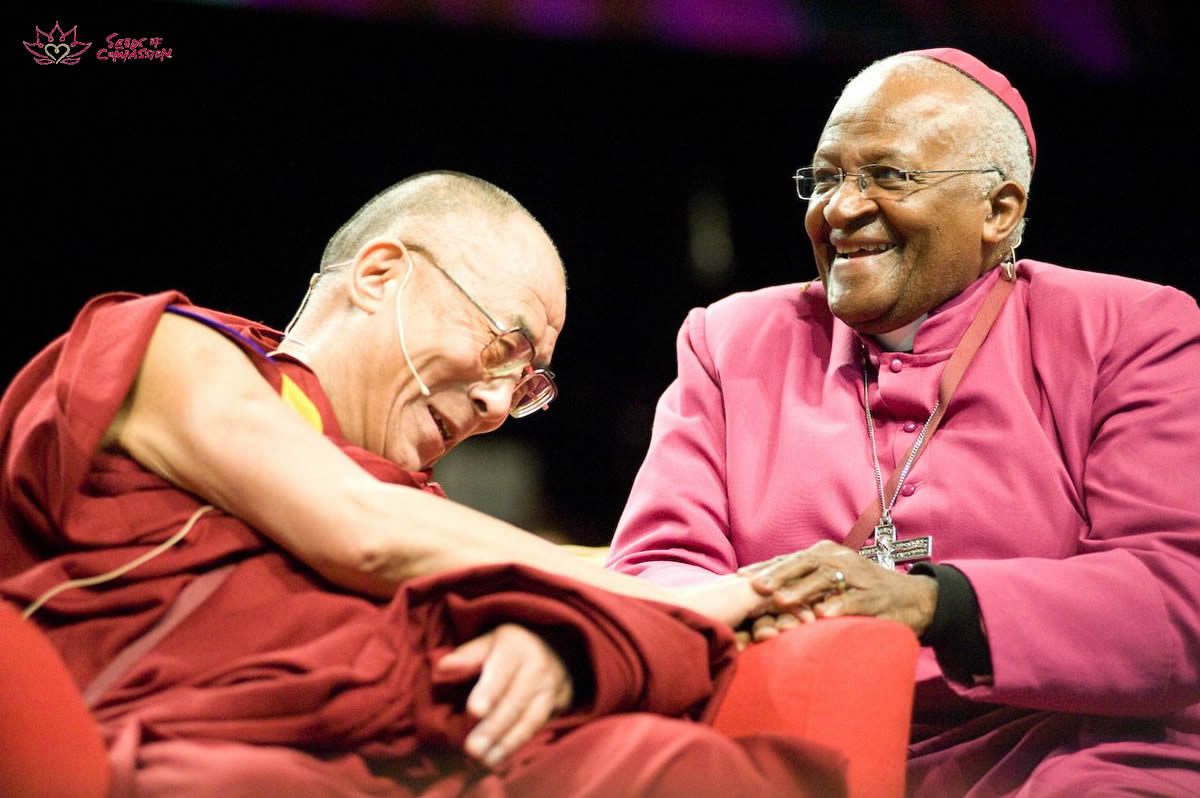
Musings On Compassion

Here are two men who understand the power of compassion.  So does Cardinal Sconborn.


Lately my life has seemed surreal.  It's been book ended by child abuseWhen at work,  I am with victims of child abuse, both physical and sexual, and when I'm home I'm reading about the same kinds of abuse in the Church.  There are days I have a very dark view of humanity.  There are nights I struggle to sleep and then when I do sleep I struggle with dark things in my dreams.  These are not classic nightmares.  These are exhausting dreams of trying to figure out what I can't seem to figure out.  Then I leave for work exhausted complete with blood shot eyes.  I fight to find the compassion that makes the most difference to the people I work with while I simultaneously try to maintain a slim thread of patience for the people I work for. When I leave work for home, I can't help but wonder who is more compromised.  Struggles in daytime lead to more struggles at night time.


I struggle with the same things about the Church as well.  I wonder just who is more compromised, the abusers or the abused, the clergy or the laity who can't seem to comprehend the actions of too many of the clergy, and I wonder about myself and my own struggles with the Church.  I search constantly for bright spots, just even little bright spots that lighten the darkness just even a little.  And I always find them--if I remember to look.  


I frequently find those bright spots, spots that might be just a little more light for me, are huge spotlights for others.  For instance, it's the twenty something young man at work whose daily night time bed wetting is now down to maybe three or four times a month because we were able to give him some relief from his endless nightmares about his biological parents.  Parents who duct taped him to floor, or threatened to drown him, or locked him in a closet.  That by the way was his toilet training at two and a half.  I like to think part of his improvement is that the little terrorized boy he will always carry within him finally feels safe.  This small step for me is a huge door, opening to a much brighter future, for him.  It means he may actually be able to live independently in the future.  And yet, we still have a long way to go before that happens.  I say 'we', because he will not walk those miles alone.  Not yet.


As far as the Church goes, I found a bright spot there as well.  Oh not in Philadelphia or New York or Washington or Minneapolis or Rome.  It's all still dark there.  No, I found it in Vienna--again.  Just when I am ready to explode over the NOM information released in Maine about the collusion of US Bishops with NOM's disgusting political strategies, there was Cardinal Schonborn.  It seems a Roman Catholic Cardinal  took the step of reinstating a young gay man to his parish's pastoral council over the objections of the parish pastor.  Cardinal Schonborn took the young man and his partner to lunch, and over lunch got to know them both and determined there were reasons the young man was voted to the parish council.  This is almost incomprehensible to me. Truly.  Probably because I'm much more familiar with American Cardinals like Dolan using his personal blog to further the agenda of gay bashing bigots like Bill Donohue.  As I've written in the past, I like Cardinal Schonborn very very much because I actually think compassion is higher value for him than lock step obedience.


And finally, there is the spotlight given to the Dalai Lama by the Templeton Foundation.  The Dalai Lama was announced as the winner of the 2012 Templeton Prize.  Part of the statement from the Foundation read:

"The Dalai Lama offers a universal voice of compassion underpinned by a love and respect for spiritually relevant scientific research that centers on every single human being."

Oh, there's that compassion word again.  Funny how I associate that word with real spiritual leadership.  Maybe it's because everything I do when I'm at work shows me compassion makes a measurable definable difference in people's lives.  Not guilt, not shaming, not condemnation, not self righteous judgment, but compassion. And forgiveness.  And love.